Posts tonen met het label Literatuur. Alle posts tonen
Posts tonen met het label Literatuur. Alle posts tonen

Why did communism take root? Given its sorrowful harvest, why did it spread? And what ever enabled it to last so long? Archie Brown’s new history of communism identifies three big questions, perhaps even the biggest, of the past century. A dead end for communism: mankind’s biggest mistake. At first sight, all seem puzzling. Communism was an impractical mishmash of ideas, imposed by squabbling zealots that promised much, delivered little and cost millions of lives. It is striking that 36 countries at one time or another adopted this system and that five -- Cuba, Laos, North Korea, Vietnam and China -- still pay lip service to it. Communism’s first big advantage was that it played on two human appetites -- the noble desire for justice and the baser hunger for vengeance. Mr Brown, emeritus professor of politics at Oxford University, traces communism’s idealistic roots in the struggle against feudal oppression and beastly working conditions. The moral weight of Karl Marx’s criticisms of 19th-century capitalism even won him praise from the high priest of Western liberalism, Karl Popper, a Viennese-born philosopher who emigrated to London. But the intoxicating excitement of revolutionary shortcuts attracted the ruthless and dogmatic, who saw the chance to put into practice Marx’s muddled Utopian notions -- and settle some scores on the way.
“The more representatives of the reactionary clergy and reactionary bourgeoisie we succeed in killing, the better,” wrote Lenin in 1922. Even so, many still resist the idea that the founding fathers of communism were murderous maniacs. Revolutions against corrupt and ossified regimes in countries such as Russia and China stoked a steamy enthusiasm that took decades to dissipate. The communist block also had two bits of good fortune. The economic slump of the 1930s discredited democracy and capitalism. Then came Hitler’s disastrous attack on the Soviet Union. The victory over fascism in Europe gave the Soviet Union, an ally of America and Britain, renewed moral weight. Given what had happened in Russia under Stalin in the 1930s, that hardly seemed deserved. As Mr Brown notes, Stalin trusted the Nazi leader more than he trusted his own generals. The Soviet Union killed more top German communists than Hitler’s regime did. Yet in some countries, Czechoslovakia for example, Soviet forces were initially welcomed as liberators, and Stalinist regimes took power with a degree of popular consent. In other countries, such as Poland and the Baltic states, it looked different: one occupation gave way to another.
The promised communist nirvana brought a mixture of mass murder, lies and latterly the grey reality of self-interested rule by authoritarian bureaucrats. But it was a bit late for second thoughts. Communist regimes proved remarkably durable, partly thanks to the use of privileges for the docile and intimidation of the independent-minded. Another source of strength was tight control of language and information that deemed most criticism unpatriotic. Cracks came as information spread, especially about the system’s bogus history and economic failings. Nationalism was a potent solvent too, particularly in places such as the Baltic states, that felt they were captive nations of a foreign empire. Mr Brown deals conscientiously with communism in Asia and the solitary Latin American outpost of Cuba. But his main expertise, acquired over decades of scholarly study, is in the Soviet Union and its east European empire. His account is studded with delightfully pertinent and pithy personal observations and anecdotes: the censors in tsarist Russia decided that Karl Marx’s “Das Kapital” was so boring that it wasn’t worth banning. Lenin thought 1917 was too early for revolution in Russia.
At the Battle of Stalingrad, 50,000 Soviet citizens, including turncoats, volunteers and conscripts, were fighting on the German side. An American communist agitator once began a speech with the immortal lines: “Workers and peasants of Brooklyn”. Nikita Khrushchev hated putting things in writing because he couldn’t spell. It is easy to be polemical about communism. Mr Brown strives to be fair-minded. He gives careful weight to the achievements of the Soviet regime, particularly in bringing mass literacy to Russia, and unparalleled social mobility. But he is sometimes too lenient. Was the Soviet Union under Leonid Brezhnev really just an authoritarian regime, rather than a totalitarian one? Saying that the Soviet Union “repossessed” the Baltic states in the secret Hitler-Stalin pact in 1939 would strike most people there as a glaring misreading of history. And his discussion of economics is skimpy and clichéd. Yet as a single-volume account of mankind’s biggest mistake, Mr Brown’s book is hard to beat. Readers over the age of 40 will find it an uncomfortable reminder of a dangerous and dismal past. For most younger readers, it will seem all but unimaginable.
Deze recensie verscheen oorspronkelijk in "The Economist".
Het boek van Archie Brown is te koop op www.amazon.com.
“The more representatives of the reactionary clergy and reactionary bourgeoisie we succeed in killing, the better,” wrote Lenin in 1922. Even so, many still resist the idea that the founding fathers of communism were murderous maniacs. Revolutions against corrupt and ossified regimes in countries such as Russia and China stoked a steamy enthusiasm that took decades to dissipate. The communist block also had two bits of good fortune. The economic slump of the 1930s discredited democracy and capitalism. Then came Hitler’s disastrous attack on the Soviet Union. The victory over fascism in Europe gave the Soviet Union, an ally of America and Britain, renewed moral weight. Given what had happened in Russia under Stalin in the 1930s, that hardly seemed deserved. As Mr Brown notes, Stalin trusted the Nazi leader more than he trusted his own generals. The Soviet Union killed more top German communists than Hitler’s regime did. Yet in some countries, Czechoslovakia for example, Soviet forces were initially welcomed as liberators, and Stalinist regimes took power with a degree of popular consent. In other countries, such as Poland and the Baltic states, it looked different: one occupation gave way to another.
The promised communist nirvana brought a mixture of mass murder, lies and latterly the grey reality of self-interested rule by authoritarian bureaucrats. But it was a bit late for second thoughts. Communist regimes proved remarkably durable, partly thanks to the use of privileges for the docile and intimidation of the independent-minded. Another source of strength was tight control of language and information that deemed most criticism unpatriotic. Cracks came as information spread, especially about the system’s bogus history and economic failings. Nationalism was a potent solvent too, particularly in places such as the Baltic states, that felt they were captive nations of a foreign empire. Mr Brown deals conscientiously with communism in Asia and the solitary Latin American outpost of Cuba. But his main expertise, acquired over decades of scholarly study, is in the Soviet Union and its east European empire. His account is studded with delightfully pertinent and pithy personal observations and anecdotes: the censors in tsarist Russia decided that Karl Marx’s “Das Kapital” was so boring that it wasn’t worth banning. Lenin thought 1917 was too early for revolution in Russia.
At the Battle of Stalingrad, 50,000 Soviet citizens, including turncoats, volunteers and conscripts, were fighting on the German side. An American communist agitator once began a speech with the immortal lines: “Workers and peasants of Brooklyn”. Nikita Khrushchev hated putting things in writing because he couldn’t spell. It is easy to be polemical about communism. Mr Brown strives to be fair-minded. He gives careful weight to the achievements of the Soviet regime, particularly in bringing mass literacy to Russia, and unparalleled social mobility. But he is sometimes too lenient. Was the Soviet Union under Leonid Brezhnev really just an authoritarian regime, rather than a totalitarian one? Saying that the Soviet Union “repossessed” the Baltic states in the secret Hitler-Stalin pact in 1939 would strike most people there as a glaring misreading of history. And his discussion of economics is skimpy and clichéd. Yet as a single-volume account of mankind’s biggest mistake, Mr Brown’s book is hard to beat. Readers over the age of 40 will find it an uncomfortable reminder of a dangerous and dismal past. For most younger readers, it will seem all but unimaginable.
Deze recensie verscheen oorspronkelijk in "The Economist".
Het boek van Archie Brown is te koop op www.amazon.com.

Suppose that you want to destroy a city. Should you bomb it, or would it be sufficient just to impose rent control? It's a bracing question at first, but some economists have argued that the two are roughly equivalent. When the price of rent is held below the market-clearing level, shortages emerge and the housing stock rapidly deteriorates. Those who advocate price controls often do so on the basis of their views on distributive justice. It isn't right, they might argue, that someone who has lived somewhere his entire life should be priced out of his neighborhood; nor is it right for fat-cat landlords to enjoy high rents simply because a lot of people want to live in New York or San Francisco. The typical rent control proposal is based on the assumption that the same amount of economic activity will take place but with a different distributional outcome. That is, the same number of apartments will be provided, and they will be provided to the same people and in the same quality. The only difference, according to rent control advocates, is that the hapless renter won't have to line the landlord's pockets. Any change in the housing stock is then viewed as a moral failing on the part of the landlord.
According to rent control advocates, landlords aren't working for the high rents they enjoy. They are just sitting around, watching the prices increase. But this view ignores the information-transmitting function of prices. A building can be used for many different things. It can be used for rental housing. It can be used for condos. It can be used for office space. It can be torn down, and the land can be used to grow crops. Prices tell us the most valuable use of the building and land. Under rent control laws, the signals are distorted.
The reality of rent control is far different from what its advocates envision. A September 13, 2008, article by the Mercatus Center's Eileen Norcross in the Wall Street Journal discusses rent control in New York City, and she suggests that this is a lesson that is worth repeating. Norcross tells us about the digs occupied by New York congressman Charles Rangel. Mr. Rangel "occupies four rent-stabilized apartments in a posh New York City building." He lives in three and uses a fourth as an office. Because of rent stabilization, we cannot tell whether those apartments would be better used to house several families instead. Mr. Rangel is able to use valuable resources, at below-market prices, to the detriment of would-be NYC residents.
Norcross reports that there are 43,317 apartments in New York City controlled by 1947 rent control laws and 1,043,677 "rent-stabilized" units; in total, she tells us that this is about 70 percent of New York City's housing stock. Originally, rent control was a temporary program aimed at helping people find places to live in New York City without paying exorbitant rents during World War II. Now, over sixty years after the war has ended, rent control still dominates the market.
At the height of the debate over whether capitalism or socialism was the most productive way to run a society, Ludwig von Mises argued that government intervention begets further government intervention. When rents are held below their market-clearing value, people take rental units off the market or convert existing units into condominiums, luxury housing, or offices. Something like "key money" might also emerge, whereby the rent is held artificially low, but the landlord demands a massive payment to rent the apartment's key. Other enterprising landlords have attempted to get around the restriction by providing "furnished" apartments, for which the tenant pays the controlled rent but must also pay a marked-up price to rent the apartment's furniture. Government officials and landlords find themselves in an endless cat-and-mouse game of regulate-and-evade that has created its own legal infrastructure in the form of the New York City Housing Court. The court has fifty judges and handles over three hundred thousand cases annually.
Rent control also destroys landlords' incentives to maintain the housing stock. With rent control in place, people are lined up for housing, and therefore, the landlord can discriminate on the basis of who will take the most meager accommodations. Eliminating a landlord's ability to enjoy the return from quality housing means eliminating the landlord's incentive to invest in upkeep.
So which is worse, rent control or bombs? On Mises.org, economist Joseph Salerno has a video lecture on prices, in which he offers a compelling visual exercise. He shows his audience pictures of destroyed urban areas and asks whether these are areas that have been subject to rent control or whether these are areas that have been bombed. It isn't easy to tell, but the lack of difference suggests a tragic but predictable irony. When a city is bombed, it is destroyed by people with evil intentions. When a city is subjected to rent control, it is destroyed by people with good intentions.
Dit artikel van Art Carden verscheen oorspronkelijk bij het Ludwig von Mises Institute en het Independent Institute, en werd ook op "Mises Daily", "The Beacon" en "Division of Labor" overgenomen.
Meer teksten van deze jonge econoom op www.thebeacon.com.
According to rent control advocates, landlords aren't working for the high rents they enjoy. They are just sitting around, watching the prices increase. But this view ignores the information-transmitting function of prices. A building can be used for many different things. It can be used for rental housing. It can be used for condos. It can be used for office space. It can be torn down, and the land can be used to grow crops. Prices tell us the most valuable use of the building and land. Under rent control laws, the signals are distorted.
The reality of rent control is far different from what its advocates envision. A September 13, 2008, article by the Mercatus Center's Eileen Norcross in the Wall Street Journal discusses rent control in New York City, and she suggests that this is a lesson that is worth repeating. Norcross tells us about the digs occupied by New York congressman Charles Rangel. Mr. Rangel "occupies four rent-stabilized apartments in a posh New York City building." He lives in three and uses a fourth as an office. Because of rent stabilization, we cannot tell whether those apartments would be better used to house several families instead. Mr. Rangel is able to use valuable resources, at below-market prices, to the detriment of would-be NYC residents.
Norcross reports that there are 43,317 apartments in New York City controlled by 1947 rent control laws and 1,043,677 "rent-stabilized" units; in total, she tells us that this is about 70 percent of New York City's housing stock. Originally, rent control was a temporary program aimed at helping people find places to live in New York City without paying exorbitant rents during World War II. Now, over sixty years after the war has ended, rent control still dominates the market.
At the height of the debate over whether capitalism or socialism was the most productive way to run a society, Ludwig von Mises argued that government intervention begets further government intervention. When rents are held below their market-clearing value, people take rental units off the market or convert existing units into condominiums, luxury housing, or offices. Something like "key money" might also emerge, whereby the rent is held artificially low, but the landlord demands a massive payment to rent the apartment's key. Other enterprising landlords have attempted to get around the restriction by providing "furnished" apartments, for which the tenant pays the controlled rent but must also pay a marked-up price to rent the apartment's furniture. Government officials and landlords find themselves in an endless cat-and-mouse game of regulate-and-evade that has created its own legal infrastructure in the form of the New York City Housing Court. The court has fifty judges and handles over three hundred thousand cases annually.
Rent control also destroys landlords' incentives to maintain the housing stock. With rent control in place, people are lined up for housing, and therefore, the landlord can discriminate on the basis of who will take the most meager accommodations. Eliminating a landlord's ability to enjoy the return from quality housing means eliminating the landlord's incentive to invest in upkeep.
So which is worse, rent control or bombs? On Mises.org, economist Joseph Salerno has a video lecture on prices, in which he offers a compelling visual exercise. He shows his audience pictures of destroyed urban areas and asks whether these are areas that have been subject to rent control or whether these are areas that have been bombed. It isn't easy to tell, but the lack of difference suggests a tragic but predictable irony. When a city is bombed, it is destroyed by people with evil intentions. When a city is subjected to rent control, it is destroyed by people with good intentions.
Dit artikel van Art Carden verscheen oorspronkelijk bij het Ludwig von Mises Institute en het Independent Institute, en werd ook op "Mises Daily", "The Beacon" en "Division of Labor" overgenomen.
Meer teksten van deze jonge econoom op www.thebeacon.com.

De zomer is in volle gang en dat hebben we andermaal geweten. De kranten staan vol voorpublicaties van boeken en ook in audiovisuele media doet men er alles aan om de Vlaming opnieuw aan het lezen te krijgen. Het is en blijft immers vreemd te moeten vaststellen dat boekenwinkels in andere landen enkel maar vette jaren lijken te kennen terwijl bij ons de ene na de andere onafhankelijke literatuurwinkel de deuren moet sluiten en enkel nog de grote ketens met een meer gediversifieerd (lees: niet-literair) aanbod kunnen overleven. Misschien krijgt literatuur, los van enkele grote evenementen of literaire festivals, en zonder de zomerse overdrive mee in beschouwing te nemen, te weinig aandacht in de mainstream-media, dit in tegenstelling tot het buitenland, vooral dan de VS, waar grote delen van de populairste talkshows rond de promotie van nieuwe boeken opgehangen worden. In deze blogpost zal ik mijn bijdrage tot de literaire zomer leveren en kort tien boeken aan u voorstellen die ik de laatste weken gelezen heb. De taal van de titels is telkens de taal waarin ik het boek gelezen heb.

Voor Eurosceptici zoals uw dienaar is het gebruik van de term "Verenigde Staten van Europa" op zich al voldoende om als naïef linkse Eurofiel afgedaan en genegeerd te worden. En dat is hier misschien wel jammer. Guy Verhofstadt heeft een totaal foute kijk op de Europese Unie, dat wisten we al wel langer, en ook al barst dit boek misschien van de vergoelijkingen van onliberaal beleid en onaanvaardbare toestanden binnen de instellingen van de EU, toch is het niet allemaal kommer en kwel. De voorstellen van Verhofstadt in dit boek - een Europa van meerdere snelheden, versterking van bepaalde wereldse beleidsdomeinen en minder EU-regelneverij - zijn grof op de korrel genomen zelfs nog enigszins aanvaardbaar voor anti-EU-adepten als ondergetekende, maar de mix van concrete beleidsmaatregelen en irrelevant gefilosofeer over hoe de EU er zou kunnen gaan uitzien kon mij al bij al toch niet boeien. Als ik een rooskleurig beeld van de EU wil krijgen, zal ik dat wel aan de voorlichtingsdienst van het Berlaymont vragen. Ik heb daar geen "onafhankelijk" mini-boekje van amper 100 bladzijden voor nodig. "De Verenigde Staten van Europa" is interessant om lezen voor pro-Europeanen die toch geen afwijkende mening dogen of voor Eurosceptici die de antithesis van hun opvattingen willen kennen.

Guido De Ville was een gerespecteerd hoofdinspecteur bij de gerechtelijke politie maar moest uiteindelijk bij de ééngemaakte politie opstappen toen hij zich iets te hard vastgebeten had in een intern dossier van een overste. De Ville koestert natuurlijk rancune voor het systeem en schopt bijwijlen nogal wild in het rond, maar uiteindelijk biedt het boek wel enkele fundamentele inzichten in het reilen en zeilen binnen de ééngemaakte politie. Die was hoofdzakelijk bedoeld om de oude macht van de militaristische Rijkswacht te breken en meer in lijn te brengen met de gangbare normen van een moderne rechtsstaat, maar schoot haar doel volledig voorbij. De top van de ééngemaakte politie bestaat voor bijna 100% uit oude Rijkswachters die vrij hun gang kunnen gaan. De ééngemaakte politie is eigenlijk een op grotere schaal voortzetting van de oude Rijkswacht. "Elke staat is een politiestaat," is één van de mooiere quotes van Guido De Ville, want zelfs als je door zijn persoonlijke problemen heenkijkt, blijken nog veel beweringen van deze oud-flik ergens wel steek te houden. Dat de Bende van Nijvel Rijkswachtbanden had, heb ik al eerder gehoord, maar dat ook de zaak-Marc Dutroux een samenzwering van de Rijkswacht was, lijkt me net iets te ver gezocht. Volgens De Ville moet er dringend ingegrepen worden binnen de ééngemaakte politie want naar verluidt stevenen we af op een totalitair geïnspireerde samenleving waar leger en Rijkswacht de plak zullen zwaaien, zoals het nu al vaak het geval zou zijn. Guido De Ville spreidt bijvoorbeeld een hele resem bewijzen en anekdotes ten toon van misbruiken met de wet op de bijzondere opsporingsmethoden, maar om daarin nu meteen al de voorbode van een rechtse staatsgreep te zien, lijkt me bij de haren getrokken.

"House of Bush, House of Saud" van de gebroeders Craig en Gerard Unger gaat over de duidelijke banden en vriendschappen tussen de machtigste politiek-economische dynastieën van de Verenigde Staten en Saudi-Arabië. De Ungers willen George W. Bush beschadigen en schuwen daarvoor niets. Het mag dan ook niemand verbazen dat een andere ultra-linkse schreeuwlelijk, Michael Moore, enkele jaren geleden net over bepaalde claims uit dit boek de documentaire "Fahrenheit 911" maakte. Het boek bevat een schat aan informatie en de anekdotische schetsen van bepaalde situaties zijn zeker te smaken, maar het geheel baadt in een overduidelijke politieke kleur en dat ondergraaft het boek volledig. Ook het spuien van allerlei beschuldigingen aan het adres van de Bush-familie zonder deze echt met argumenten te staven, is bijwijlen echt storend. Verder zegt de triomfantelijke schrijfstijl van de Ungers alsof zij iets nieuws ontdekt hebben en de samenleving zo van een groot gevaar behoed hebben meer iets over hen dan over de betrokkenen. De banden tussen de Bush-familie en het huis-Saud dateren al van decennia geleden en hebben meer met wederzijdse belangen dan met samenzweringen allerhande te maken. Daarbij heb ik nog steeds niet gesnapt welke meerwaarde George W. Bush gezien zou hebben in het per uitzondering laten vertrekken van enkele Saudische prinsen na 11 september 2001. Ofwel waren zij vrienden en hadden zij met 9-11 niets te maken, ofwel waren ze betrokken, maar dan waren het toch geen vrienden meer en zou Bush ze toch zeker niet laten gaan. Kortom, ben je tegen Bush, vind je de waarheid overschat en ben je niet vies van een samenzweringstheorietje meer of minder, dan is dit boek zeker iets voor u. Zoniet laat je het beter links leggen.

Rudy Aernoudt is een kleurrijke figuur, daar is iedereen het over eens, en zijn pro-Belgische standpunten in een tijdperk waar regionalisme en separatisme aan zet zijn, veroordelen hem vaak tot een tribune in de marge van het debat. Maar dit neemt niet weg dat zijn boek "Vlaanderen-Wallonie, je t'aime moi non plus" best wel stof tot nadenken geeft. Hij weerlegt de cijfers van het Warande-Manifest en spreekt de vindingen van professor Juul Hannes tegen alsof de Vlamingen altijd al meer bijgedragen hebben tot de Belgische staat dan de Franstaligen. Aernoudt is zelf econoom en heeft een carrière als kabinetschef in Vlaanderen én Wallonië achter de rug. Hij put dus ook uit zijn eigen ervaring om bepaalde Vlaamse claims te ontkrachten zonder daarom per se de kant van de Walen te kiezen. Aernoudt is niet vies van meer regionale autonomie of van een activering van de Waalse werklozen, maar past voor valse Vlaamse stoerdoenerij alsof er in Vlaanderen geen regio's zijn die enkel maar op EU-steun kunnen overleven. Ook stelt Aernoudt dat de transfers in de sociale zekerheid aan het verminderen zijn door de sterk vergrijzende bevolking in Vlaanderen. Aernoudt toont zich in dit boek veel gematigder dan aanvankelijk gedacht, zeker na het lezen van zeer ontvlambare recensies uit Vlaamsgezinde hoek, en dat is maar goed ook. Aan puriteinse utopisten hebben we lak in België. Praktische oplossingen zonder dogma's of taboes is de boodschap. En Rudy Aernoudt lijkt dat laatste alvast begrepen te hebben.

In een ander boek neemt Rudy Aernoudt in nog meer detail de wantoestanden binnen de verschillende Belgische bestuursniveau's, structuren en instellingen onder de loep. In "Hoe de overheid uw geld verkwist" krijgt hij daarbij de hulp van MR-senator Alain Destexhe die moeilijk van PS-sympathieën of Waalse struisvogelpolitiek beticht kan worden na de publicatie van het pamflet "Wallonie, la verité des chiffres" enkele jaren geleden. Aernoudt en Destexhe gaan met een botte bijl door de federale administraties, pakken uit met een hele resem kostenbesparende maatregelen om de internationale scheeftrekking waarin België zich op bijna alle overheidsdomeinen bevindt recht te trekken, en breken een lans voor externe audits, het afschaffen van de vaste benoeming, de reductie van het aantal apparatsjiks met minstens een kwart en het runnen van overheidsdiensten als private bedrijven met incentives en winstbejag. Als liberaal kan ik het pleidooi van de beide heren zeker smaken, alleen blijven ze een beetje steken in de status quo en vergeten ze in hun queeste naar efficiëntie en optimalisatie de echte hamvraag te stellen: welke KERNtaken heeft een moderne overheid nog? Dat ook de structuren van de regionale en gemeenschappelijke besturen aangevallen worden, zowel in het noorden met de reusachtige kabinetten en de welig tierende particratie als in het zuiden met de moddervette provinciale administraties en de politisering van het ganse staatsapparaat, is een goede zaak. Vele Vlamingen dwalen immers wanneer ze denken dat het er bij hun overheid in tegenstelling tot de Waalse wel goed aan toegaat. Quod non dus.

In "Wedervaren van een Cabinetard" schetst Rudy Aernoudt zijn korte passage als kabinetschef van Vlaams minister Fientje Moerman en legt hij zijn kant van het verhaal uit. Het boek barst van de persoonlijke aanvallen, rancuneuze uitlatingen en is niet meteen verfijnd geschreven. Wie meer wil weten over het koningsdrama dat zich toen op het kabinet-Moerman afgespeeld heeft, zal dit boek zeker kunnen smaken, net als iedereen die op smeuïge verhalen over corruptie, ambetantenaren, kleptocratie en nepotisme kickt. Ik vond het boek best amusant om lezen, alleen heb ik mij mateloos geërgerd aan het "de wereld is tegen mij"-gevoel dat Aernoudt de godganse tijd denkt te moeten ventileren. Of hij zo onkreukbaar is als hij doet uitschijnen, is ook weer een ander verhaal. En al heb ik natuurlijk geen enkel bewijs om zoiets te staven anders dan een opiniestuk van drie gewezen collega's van hem die dat toen in "De Morgen" opgerakeld hebben... Volgens mij werken er bij de overheid een heleboel goede mensen en reageert iedereen marktconform op prikkels, ook als de uitkomst daarvan immoreel zou zijn. Ik heb Moerman steeds een uitstekend minister gevonden en Aernoudt steeds een begeesterd liberaal econoom. Jammer dat het zo is afgelopen.

Archie Brown is een meester in het schrijven van luchtige boeken over zware thema's en dat is hier niet anders. Zijn bronnenonderzoek is fenomenaal, zijn schrijfstijl zeer aangenaam om lezen, zijn constante wisselwerking tussen leuke anekdotes en de harde werkelijkheid zeer prikkelend, en zijn ruime benadering van het thema meer dan gewoon verhelderend. Brown spreekt over het analfabetisme van Chroetsjov en over de verwoede pogingen van zijn staff om dat geheim te houden, over de grillen van Bresnjev en over de paranoïde trekjes van Stalin. Door meer dan anders de nadruk te leggen op de menselijke tekortkomingen van de Sovjetleiders maakt Brown wel een ongelukkige vergissing. Net zoals een boek over de keukenvoorkeur van Adolf Hitler een aanfluiting zou zijn voor de miljoenen doden van zijn regime is dat hier niet anders. De stelling van Brown alsof de Sovjet-Unie onder Bresjnev niet meer echt autoritair was, is op lucht en ongefundeerd nattevingerwerk gebaseerd. En ook nadien onder Tsjernenko en Andropov was dat niet het geval, net het tegendeel zelfs. Beide hadden nog maar een fractie van de macht en het aanzien van hun voorgangers en compenseerden dat immers net met een (nog) repressiever bewind en een (nog) meer totalitaire kijk op de samenleving. Wie Browns relativerende analyses negeert, vindt wel een schitterend boek over de opkomst en de val van 's werelds meest perverse staatssysteem.

Het boek "Gazprom: Ruslands nieuwe wapen" is vertaald en dat heb je als lezer wel geweten. Het leesritme geraakt maar al te vaak verstoord door fouten en/of onnauwkeurigheden in de Nederlandse vertaling. De inhoud is natuurlijk wel dik in orde. Mikhail Sygar en Valerij Panyushkin schetsen op analytische wijze de opgang van het grootste energiebedrijf van de huidige wereld, van de wilde privatisering van de staatsbedrijven na de val van het communisme over de tweestrijd tussen Jeltsin en zijn entourage en Tsjernomyrdin en de Gazprom-stakeholders tot de hernationalisering van het bedrijf onder Vladimir Poetin. Volgens de auteurs kan men Gazprom niet wegdenken uit de Russische geschiedenis van de laatste twee decennia. Ze staan ook stil bij de impact van dit bedrijf op de wereld én op de voormalige Sovjetrepublieken waar vaak lokale dictators door oliegelden nog tot diep in de jaren 2000 aan de macht zijn kunnen blijven. Moskou had naar verluidt tegenover hen ook maar één doel: Gazprom niet hinderen. Al de rest was daaraan ondergeschikt. Het boek is een aanrader voor fans van de recente Russische geschiedenis, maar geopolitieke strategen op zoek naar antwoorden voor toekomstig beleid lopen dit boek beter voorbij.

Ward Beysen begon een eigen partij en sprong in een vijver, Hugo Coveliers begon een eigen partij en ging uit angst voor de kiezer met het Vlaams Belang in zee, en ook Jean-Marie Dedecker begon een eigen partij. Enkel die laatste lijkt vandaag levensvatbaar te zijn. Een andere VLD-dissident waarvan we al lange tijd niets meer gehoord hadden, gewezen partijsecretaris en senator Leo Goovaerts, vond ook zijn tijd gekomen om eens terug in de schijnwerpers te staan. Geen eigen partij dit keer (ook hij probeerde immers ooit met de eigen beweging "Veilig Blauw" in de politiek iets te forceren) maar een boek over zijn passage aan de top van de VLD. Het boek "Wat ik zag was ontnuchterend" leest zeer vlot en is leuk van opzet. Vele heilige huisjes uit de financiering van partijen worden door hem in detail uit de doeken gedaan, maar de weinige echt relevante beweringen worden wel overschaduwd door onbeargumenteerde claims alsof Guy Verhofstadt systematisch 80% van fondsenwervingsdiners in eigen zak zou steken, en Karel De Gucht als een echte Machiavelli steeds op zoek was naar een andere partijnotabele om kapot te maken. Wie wat liberale roddels wil lezen, kan niet om dit boek van Leo Goovaerts heen. Vooral burgers die nog steeds denken dat de politiek in het teken van de mensen en het maatschappelijke goed staat, zullen dit boek als een ogen-opener beschouwen. VLD-fans kunnen zich beter onthouden, door hen zal dit boek immers toch als een pure afrekening geminimaliseerd worden.

Paul Van Buitenen was jarenlang bureaucraat bij de Europese Unie, maar volgde uiteindelijk zijn geweten in plaats van zijn verstand en begon via enkele bevriende Europese Parlementsleden zoals een Jens-Peter Bonde of een Bart Staes allerlei wantoestanden binnen de Eurocratie aan te kaarten, deels met succes. De val van de Santer-commissie is zijn werk en ook de verantwoordelijk voor de enorme media-aandacht voor schandalen zoals die bij Eurostat en OLAF kunnen we grotendeels op zijn schouders leggen, net als de alomtegenwoordige consternatie toen de hoofdboekhoudster van de Europese Commissie, Marta Andreasen, ontslag moest nemen nadat zij geweigerd had de rekeningen af te tekenen. In 2004 nam Paul Van Buitenen met een eigen Eurokritische partij "Europa Transparant" aan de EU-verkiezingen deel en haalde uit het niets twee zetels binnen. Het boek "In de loopgraven van Brussel" verscheen op enkele maanden voor die verkiezingen en was dus ook deels als verkiezingsmanifest opgevat. Het boek bevat honderden anekdotes over misbruiken binnen de Europese Unie. Geen enkele instelling blijft gespaard. Voor naïeve Eurofielen is dit boek zeker een aanrader. Voor de al iets kritischer ingestelde lezers zal het boek niets fundamenteel nieuws aanreiken, naast de talrijke verhalen en voorbeelden natuurlijk, én de iets te regelmatige parallellen tussen zijn strijd voor rechtvaardigheid en transparantie, en het werk van een zekere Jezus Christus tweeduizend jaar geleden. Dat laatste en de zelfingenomenheid daar rond vergeven we hem van harte.
Deze leestips verschenen ook op de metablog "In Flanders Fields".
Meer interessante boekbesprekingen op www.newyorkbooks.com.
Voor Eurosceptici zoals uw dienaar is het gebruik van de term "Verenigde Staten van Europa" op zich al voldoende om als naïef linkse Eurofiel afgedaan en genegeerd te worden. En dat is hier misschien wel jammer. Guy Verhofstadt heeft een totaal foute kijk op de Europese Unie, dat wisten we al wel langer, en ook al barst dit boek misschien van de vergoelijkingen van onliberaal beleid en onaanvaardbare toestanden binnen de instellingen van de EU, toch is het niet allemaal kommer en kwel. De voorstellen van Verhofstadt in dit boek - een Europa van meerdere snelheden, versterking van bepaalde wereldse beleidsdomeinen en minder EU-regelneverij - zijn grof op de korrel genomen zelfs nog enigszins aanvaardbaar voor anti-EU-adepten als ondergetekende, maar de mix van concrete beleidsmaatregelen en irrelevant gefilosofeer over hoe de EU er zou kunnen gaan uitzien kon mij al bij al toch niet boeien. Als ik een rooskleurig beeld van de EU wil krijgen, zal ik dat wel aan de voorlichtingsdienst van het Berlaymont vragen. Ik heb daar geen "onafhankelijk" mini-boekje van amper 100 bladzijden voor nodig. "De Verenigde Staten van Europa" is interessant om lezen voor pro-Europeanen die toch geen afwijkende mening dogen of voor Eurosceptici die de antithesis van hun opvattingen willen kennen.
Guido De Ville was een gerespecteerd hoofdinspecteur bij de gerechtelijke politie maar moest uiteindelijk bij de ééngemaakte politie opstappen toen hij zich iets te hard vastgebeten had in een intern dossier van een overste. De Ville koestert natuurlijk rancune voor het systeem en schopt bijwijlen nogal wild in het rond, maar uiteindelijk biedt het boek wel enkele fundamentele inzichten in het reilen en zeilen binnen de ééngemaakte politie. Die was hoofdzakelijk bedoeld om de oude macht van de militaristische Rijkswacht te breken en meer in lijn te brengen met de gangbare normen van een moderne rechtsstaat, maar schoot haar doel volledig voorbij. De top van de ééngemaakte politie bestaat voor bijna 100% uit oude Rijkswachters die vrij hun gang kunnen gaan. De ééngemaakte politie is eigenlijk een op grotere schaal voortzetting van de oude Rijkswacht. "Elke staat is een politiestaat," is één van de mooiere quotes van Guido De Ville, want zelfs als je door zijn persoonlijke problemen heenkijkt, blijken nog veel beweringen van deze oud-flik ergens wel steek te houden. Dat de Bende van Nijvel Rijkswachtbanden had, heb ik al eerder gehoord, maar dat ook de zaak-Marc Dutroux een samenzwering van de Rijkswacht was, lijkt me net iets te ver gezocht. Volgens De Ville moet er dringend ingegrepen worden binnen de ééngemaakte politie want naar verluidt stevenen we af op een totalitair geïnspireerde samenleving waar leger en Rijkswacht de plak zullen zwaaien, zoals het nu al vaak het geval zou zijn. Guido De Ville spreidt bijvoorbeeld een hele resem bewijzen en anekdotes ten toon van misbruiken met de wet op de bijzondere opsporingsmethoden, maar om daarin nu meteen al de voorbode van een rechtse staatsgreep te zien, lijkt me bij de haren getrokken.
"House of Bush, House of Saud" van de gebroeders Craig en Gerard Unger gaat over de duidelijke banden en vriendschappen tussen de machtigste politiek-economische dynastieën van de Verenigde Staten en Saudi-Arabië. De Ungers willen George W. Bush beschadigen en schuwen daarvoor niets. Het mag dan ook niemand verbazen dat een andere ultra-linkse schreeuwlelijk, Michael Moore, enkele jaren geleden net over bepaalde claims uit dit boek de documentaire "Fahrenheit 911" maakte. Het boek bevat een schat aan informatie en de anekdotische schetsen van bepaalde situaties zijn zeker te smaken, maar het geheel baadt in een overduidelijke politieke kleur en dat ondergraaft het boek volledig. Ook het spuien van allerlei beschuldigingen aan het adres van de Bush-familie zonder deze echt met argumenten te staven, is bijwijlen echt storend. Verder zegt de triomfantelijke schrijfstijl van de Ungers alsof zij iets nieuws ontdekt hebben en de samenleving zo van een groot gevaar behoed hebben meer iets over hen dan over de betrokkenen. De banden tussen de Bush-familie en het huis-Saud dateren al van decennia geleden en hebben meer met wederzijdse belangen dan met samenzweringen allerhande te maken. Daarbij heb ik nog steeds niet gesnapt welke meerwaarde George W. Bush gezien zou hebben in het per uitzondering laten vertrekken van enkele Saudische prinsen na 11 september 2001. Ofwel waren zij vrienden en hadden zij met 9-11 niets te maken, ofwel waren ze betrokken, maar dan waren het toch geen vrienden meer en zou Bush ze toch zeker niet laten gaan. Kortom, ben je tegen Bush, vind je de waarheid overschat en ben je niet vies van een samenzweringstheorietje meer of minder, dan is dit boek zeker iets voor u. Zoniet laat je het beter links leggen.
Rudy Aernoudt is een kleurrijke figuur, daar is iedereen het over eens, en zijn pro-Belgische standpunten in een tijdperk waar regionalisme en separatisme aan zet zijn, veroordelen hem vaak tot een tribune in de marge van het debat. Maar dit neemt niet weg dat zijn boek "Vlaanderen-Wallonie, je t'aime moi non plus" best wel stof tot nadenken geeft. Hij weerlegt de cijfers van het Warande-Manifest en spreekt de vindingen van professor Juul Hannes tegen alsof de Vlamingen altijd al meer bijgedragen hebben tot de Belgische staat dan de Franstaligen. Aernoudt is zelf econoom en heeft een carrière als kabinetschef in Vlaanderen én Wallonië achter de rug. Hij put dus ook uit zijn eigen ervaring om bepaalde Vlaamse claims te ontkrachten zonder daarom per se de kant van de Walen te kiezen. Aernoudt is niet vies van meer regionale autonomie of van een activering van de Waalse werklozen, maar past voor valse Vlaamse stoerdoenerij alsof er in Vlaanderen geen regio's zijn die enkel maar op EU-steun kunnen overleven. Ook stelt Aernoudt dat de transfers in de sociale zekerheid aan het verminderen zijn door de sterk vergrijzende bevolking in Vlaanderen. Aernoudt toont zich in dit boek veel gematigder dan aanvankelijk gedacht, zeker na het lezen van zeer ontvlambare recensies uit Vlaamsgezinde hoek, en dat is maar goed ook. Aan puriteinse utopisten hebben we lak in België. Praktische oplossingen zonder dogma's of taboes is de boodschap. En Rudy Aernoudt lijkt dat laatste alvast begrepen te hebben.
In een ander boek neemt Rudy Aernoudt in nog meer detail de wantoestanden binnen de verschillende Belgische bestuursniveau's, structuren en instellingen onder de loep. In "Hoe de overheid uw geld verkwist" krijgt hij daarbij de hulp van MR-senator Alain Destexhe die moeilijk van PS-sympathieën of Waalse struisvogelpolitiek beticht kan worden na de publicatie van het pamflet "Wallonie, la verité des chiffres" enkele jaren geleden. Aernoudt en Destexhe gaan met een botte bijl door de federale administraties, pakken uit met een hele resem kostenbesparende maatregelen om de internationale scheeftrekking waarin België zich op bijna alle overheidsdomeinen bevindt recht te trekken, en breken een lans voor externe audits, het afschaffen van de vaste benoeming, de reductie van het aantal apparatsjiks met minstens een kwart en het runnen van overheidsdiensten als private bedrijven met incentives en winstbejag. Als liberaal kan ik het pleidooi van de beide heren zeker smaken, alleen blijven ze een beetje steken in de status quo en vergeten ze in hun queeste naar efficiëntie en optimalisatie de echte hamvraag te stellen: welke KERNtaken heeft een moderne overheid nog? Dat ook de structuren van de regionale en gemeenschappelijke besturen aangevallen worden, zowel in het noorden met de reusachtige kabinetten en de welig tierende particratie als in het zuiden met de moddervette provinciale administraties en de politisering van het ganse staatsapparaat, is een goede zaak. Vele Vlamingen dwalen immers wanneer ze denken dat het er bij hun overheid in tegenstelling tot de Waalse wel goed aan toegaat. Quod non dus.
In "Wedervaren van een Cabinetard" schetst Rudy Aernoudt zijn korte passage als kabinetschef van Vlaams minister Fientje Moerman en legt hij zijn kant van het verhaal uit. Het boek barst van de persoonlijke aanvallen, rancuneuze uitlatingen en is niet meteen verfijnd geschreven. Wie meer wil weten over het koningsdrama dat zich toen op het kabinet-Moerman afgespeeld heeft, zal dit boek zeker kunnen smaken, net als iedereen die op smeuïge verhalen over corruptie, ambetantenaren, kleptocratie en nepotisme kickt. Ik vond het boek best amusant om lezen, alleen heb ik mij mateloos geërgerd aan het "de wereld is tegen mij"-gevoel dat Aernoudt de godganse tijd denkt te moeten ventileren. Of hij zo onkreukbaar is als hij doet uitschijnen, is ook weer een ander verhaal. En al heb ik natuurlijk geen enkel bewijs om zoiets te staven anders dan een opiniestuk van drie gewezen collega's van hem die dat toen in "De Morgen" opgerakeld hebben... Volgens mij werken er bij de overheid een heleboel goede mensen en reageert iedereen marktconform op prikkels, ook als de uitkomst daarvan immoreel zou zijn. Ik heb Moerman steeds een uitstekend minister gevonden en Aernoudt steeds een begeesterd liberaal econoom. Jammer dat het zo is afgelopen.
Archie Brown is een meester in het schrijven van luchtige boeken over zware thema's en dat is hier niet anders. Zijn bronnenonderzoek is fenomenaal, zijn schrijfstijl zeer aangenaam om lezen, zijn constante wisselwerking tussen leuke anekdotes en de harde werkelijkheid zeer prikkelend, en zijn ruime benadering van het thema meer dan gewoon verhelderend. Brown spreekt over het analfabetisme van Chroetsjov en over de verwoede pogingen van zijn staff om dat geheim te houden, over de grillen van Bresnjev en over de paranoïde trekjes van Stalin. Door meer dan anders de nadruk te leggen op de menselijke tekortkomingen van de Sovjetleiders maakt Brown wel een ongelukkige vergissing. Net zoals een boek over de keukenvoorkeur van Adolf Hitler een aanfluiting zou zijn voor de miljoenen doden van zijn regime is dat hier niet anders. De stelling van Brown alsof de Sovjet-Unie onder Bresjnev niet meer echt autoritair was, is op lucht en ongefundeerd nattevingerwerk gebaseerd. En ook nadien onder Tsjernenko en Andropov was dat niet het geval, net het tegendeel zelfs. Beide hadden nog maar een fractie van de macht en het aanzien van hun voorgangers en compenseerden dat immers net met een (nog) repressiever bewind en een (nog) meer totalitaire kijk op de samenleving. Wie Browns relativerende analyses negeert, vindt wel een schitterend boek over de opkomst en de val van 's werelds meest perverse staatssysteem.
Het boek "Gazprom: Ruslands nieuwe wapen" is vertaald en dat heb je als lezer wel geweten. Het leesritme geraakt maar al te vaak verstoord door fouten en/of onnauwkeurigheden in de Nederlandse vertaling. De inhoud is natuurlijk wel dik in orde. Mikhail Sygar en Valerij Panyushkin schetsen op analytische wijze de opgang van het grootste energiebedrijf van de huidige wereld, van de wilde privatisering van de staatsbedrijven na de val van het communisme over de tweestrijd tussen Jeltsin en zijn entourage en Tsjernomyrdin en de Gazprom-stakeholders tot de hernationalisering van het bedrijf onder Vladimir Poetin. Volgens de auteurs kan men Gazprom niet wegdenken uit de Russische geschiedenis van de laatste twee decennia. Ze staan ook stil bij de impact van dit bedrijf op de wereld én op de voormalige Sovjetrepublieken waar vaak lokale dictators door oliegelden nog tot diep in de jaren 2000 aan de macht zijn kunnen blijven. Moskou had naar verluidt tegenover hen ook maar één doel: Gazprom niet hinderen. Al de rest was daaraan ondergeschikt. Het boek is een aanrader voor fans van de recente Russische geschiedenis, maar geopolitieke strategen op zoek naar antwoorden voor toekomstig beleid lopen dit boek beter voorbij.
Ward Beysen begon een eigen partij en sprong in een vijver, Hugo Coveliers begon een eigen partij en ging uit angst voor de kiezer met het Vlaams Belang in zee, en ook Jean-Marie Dedecker begon een eigen partij. Enkel die laatste lijkt vandaag levensvatbaar te zijn. Een andere VLD-dissident waarvan we al lange tijd niets meer gehoord hadden, gewezen partijsecretaris en senator Leo Goovaerts, vond ook zijn tijd gekomen om eens terug in de schijnwerpers te staan. Geen eigen partij dit keer (ook hij probeerde immers ooit met de eigen beweging "Veilig Blauw" in de politiek iets te forceren) maar een boek over zijn passage aan de top van de VLD. Het boek "Wat ik zag was ontnuchterend" leest zeer vlot en is leuk van opzet. Vele heilige huisjes uit de financiering van partijen worden door hem in detail uit de doeken gedaan, maar de weinige echt relevante beweringen worden wel overschaduwd door onbeargumenteerde claims alsof Guy Verhofstadt systematisch 80% van fondsenwervingsdiners in eigen zak zou steken, en Karel De Gucht als een echte Machiavelli steeds op zoek was naar een andere partijnotabele om kapot te maken. Wie wat liberale roddels wil lezen, kan niet om dit boek van Leo Goovaerts heen. Vooral burgers die nog steeds denken dat de politiek in het teken van de mensen en het maatschappelijke goed staat, zullen dit boek als een ogen-opener beschouwen. VLD-fans kunnen zich beter onthouden, door hen zal dit boek immers toch als een pure afrekening geminimaliseerd worden.
Paul Van Buitenen was jarenlang bureaucraat bij de Europese Unie, maar volgde uiteindelijk zijn geweten in plaats van zijn verstand en begon via enkele bevriende Europese Parlementsleden zoals een Jens-Peter Bonde of een Bart Staes allerlei wantoestanden binnen de Eurocratie aan te kaarten, deels met succes. De val van de Santer-commissie is zijn werk en ook de verantwoordelijk voor de enorme media-aandacht voor schandalen zoals die bij Eurostat en OLAF kunnen we grotendeels op zijn schouders leggen, net als de alomtegenwoordige consternatie toen de hoofdboekhoudster van de Europese Commissie, Marta Andreasen, ontslag moest nemen nadat zij geweigerd had de rekeningen af te tekenen. In 2004 nam Paul Van Buitenen met een eigen Eurokritische partij "Europa Transparant" aan de EU-verkiezingen deel en haalde uit het niets twee zetels binnen. Het boek "In de loopgraven van Brussel" verscheen op enkele maanden voor die verkiezingen en was dus ook deels als verkiezingsmanifest opgevat. Het boek bevat honderden anekdotes over misbruiken binnen de Europese Unie. Geen enkele instelling blijft gespaard. Voor naïeve Eurofielen is dit boek zeker een aanrader. Voor de al iets kritischer ingestelde lezers zal het boek niets fundamenteel nieuws aanreiken, naast de talrijke verhalen en voorbeelden natuurlijk, én de iets te regelmatige parallellen tussen zijn strijd voor rechtvaardigheid en transparantie, en het werk van een zekere Jezus Christus tweeduizend jaar geleden. Dat laatste en de zelfingenomenheid daar rond vergeven we hem van harte.
Deze leestips verschenen ook op de metablog "In Flanders Fields".
Meer interessante boekbesprekingen op www.newyorkbooks.com.

Since 1990, we've heard about what a low rate of inflation we've experienced. In some ways, it might appear low compared with what we experienced in the late 1970s. The dollar of 1976 was worth only 63 cents by 1981, once the Nixon-Carter inflation had done its work. The cultural and economic consequences were devastating. A generation was punished for having saved and accumulated capital. Debtors were rewarded, with the government being biggest debtor, of course. This period of our financial history was called the Age of Inflation. But did it really come to an end? The problem is that we've continued to live through the late 1970s, just stretched out over a greater period of time. The dollar of 1990 is today worth 64 cents. And yet we call this a low rate of inflation, though the same level of devaluation was accomplished. Really, it is perverse that we should ever be sanguine about inflation. It would be as if we screamed bloody murder if someone broke into our house one night and stole all our flatware, our electronics, and our precious metals. But if the same burglar had the key and came in every day to grab just a fork, an iPod, or a Krugerrand, should we happily announce that we are experiencing a low-burglar rate?
Whether you think prices are rising or falling depends on what you have been buying lately, because it is true that not all prices are rising. Some are falling, and for this we can only be grateful. Since 1996, wireless telephone service has dropped by 40%. Personal computers and software accessories have fallen by more than 55%. Apparel in general, including women's clothing, has fallen by 10%. Furniture and bedding has fallen by 5%. Now, keep in mind several points. These price declines are a reality. They haven’t occurred despite the existence of the CPI. Indeed, these price declines are factored into the creation of the CPI. Now, the CPI is nothing but an index number that compares the change in one group of averages to the same group of averages at a later time. It may or may not have anything to do with an individual consumer’s experience. The CPI is like a composite picture of all the pictures hanging in your living room; such a thing can obscure more than reveal.

Murray Rothbard used to say that the main thing he bought with his money was scholarly books, one of the fastest-rising goods, and so his personal inflation rate was far above the average. Of course, that was before the internet starting doing strange things to book prices, driving the price of new books way down, and the price of used books way up. In any case, the CPI is not a measure of price inflation. It is a statistical fiction that serves only the function of helping us keep track of general price movements. There is nothing in nature called the “Consumer Price Index”. There are only consumer prices. In the absence of government money management, prices rise and fall based on supply and demand. Even in the presence of government management, not all prices rise at the same rate, while some prices fall. For years, Fed officials and others have warned about the grave dangers associated with deflation. Now, we praise this very thing taking place in clothing, technology, and other goods that you can buy at large discount stores.
What is the result? It's been a wonderful blessing to consumers. Indeed, it has been our saving grace in times of soaring prices for education, energy, houses, and medical care. If some prices had not fallen, the American economy would be in much worse shape. Does deflation make business more difficult? Most certainly. Retailers can't hold on to inventory as long. The maintenance of profitability involves relentless innovation, keen-eyed cost watching and cutting, and constant attention to the competition. In a deflationary environment, consumers expect outstanding services and a big bang for their buck. They are ready to defect to the competition over the slightest thing. All these are facts of life in a deflationary environment. My only question is: why should we regret this? If we seek an economy in which waste is held to a minimum, the people are served, the consumer is king, business operates with top efficiency and innovation, this is all to the good. Deflation never harmed anyone except those who are not willing to work hard for their profits.
It's true that these industries are constantly kvetching about this supposed problem. But I don't see any evidence that entrepreneurs are thereby avoiding these industries. In fact, these industries have become increasingly competitive and robust job creators. Deflation clarifies what kind of business people should be doing and who should be doing it. Let me give you an example from the Mises Institute store. Last year we considered offering specialized flash keys of memory, emblazoned with the Institute logo. We hoped to carry sticks that held up to 1 gig of data. Pricing them out, we found that they were running about $100 retail. We could get them customized at wholesale prices. But then we took notice of price trends for hard memory, and saw nothing but falling prices. So we decided against it. Sure enough, six months later, you could get a gig stick for $50, less than we could have paid to have them made. Today you can find them for $20 in some places. What would have happened to our stock? We would have had to sell at a loss.
What this taught us is that we should leave the business of computer hardware sales to specialists. Downward price pressure helped us understand this. If you are in business, you understand this point too. I was walking through an Office Max the other day and saw some gig sticks for $80. Now, either the store manager is not paying attention to price changes or he is counting on very gullible consumers. You can't make money for long with either practice. Well, let us consider, then, some of the price increases that have skewed the CPI so as to cause the entire index to rise so dramatically over the same period of time. Medical care has gone up 45% since 1996. Education has gone up 80%. Housing has gone up 33%. Energy prices have soared more than 100%. Now, given these figures, and excluding the deflationary sectors, it should be clear that the CPI should be rising much more than it is.
And yet even by the standard measure, the increase of inflation in our times has led to declines in real wages over the last three years, in a period of sustained economic growth. This is an alarming fact. Thanks to inflation, we are not benefiting from economic growth the way we should. If the economy turns to recession under these conditions, it's not going to be a pretty picture. Take notice of the sectors in which prices are rising and those that are falling. The markets that are relatively free are innovative and internationally competitive. Consumers have benefited from pressure from imports. The globalization of textiles, for example, has been a great boon to consumers, and this is despite protectionist legislation designed to keep out as many goods as possible. These sectors are also the most innovative. Meanwhile, the sectors in which government is heavily involved - through taxes, regulations, subsidies, protectionism, price supports, and what have you - we find prices are going up.
What is happening here? To some extent, the interventions themselves are keeping prices high. But they are also immunizing these sectors against pressures that would otherwise cause them to respond to inflationary prices by cutting costs. In other words, it is the inflationary pressure of bad monetary policy that has affected these sectors more than any other. The relatively free market sectors are dealing with inflationary pressure by adjusting to serve consumers in the best possible way. When I say "bad" monetary policy, let me be clear what I mean. I mean all monetary policy - the very existence of monetary policy. The free market position that Mises and his successors laid out regards money as a good like any other, one whose creation and management should be handled by the market economy. There should be no policy at all. That's the free market answer.
Most economists are happy to have the market for shoes, watches, and computers managed by the market, but they draw the line on money. They believe that in this sector, we need socialist-style money management. This is where the Austrians are different. Carl Menger broke new ground in 1871 by explaining the origin of money. It was not created by the state or by some sort of social compact. It emerged from within the structures of the market economy. Barter is suitable for a primitive level of development, but once societies and economies grow more complex, traders find a need for a good that they can purchase and hold to trade for other goods and services at a later time. This good is the most highly valued good in society, also called money. Money makes possible the emergence of cardinal numbers that permit calculation of profits and losses over time. This is the essence of economization.
Experience suggests that the best money commodity is one that is divisible, qualitatively uniform, has a high value per unit of weight, is portable, and cannot be manufactured without end. Precious metals, then, have served this function quite well. One precious metal rose above the others in being the most suitable, and that is gold. Now, there is nothing magical or mystical about gold that made it money. It just happened to conform mostly closely to the features that make for excellent money. That's why the quality of money in society is so critical to a well-functioning economy. And how do we insure quality? It is the same with money and banking as it is with computers and cell phones. We need the market to be in charge. We need free entry and exit, rivalrous competition, consumer sovereignty, and no special privileges. Our current monetary system has none of those features, so we shouldn't be surprised to see the quality of our money slipping day by day.
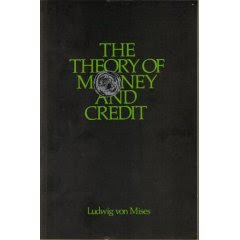
As we all know, the dollar was once as good as gold. We never had a perfect gold standard in this country, which I would define as being one that provides for perfect and instant convertibility between paper money and gold coin, one without a central bank managing it, one in which there is no government coinage but only private coinage, and one that circulated in a banking system that enjoys no government privileges whatsoever. That ideal system has never been a reality in full. But as a general rule, the more closely a money system reflects that ideal, the better it is. The more it is monopolized, cartelized, managed, and papered over, the worse it is. This was the thesis advanced by Ludwig von Mises in his 1912 book entitled “The Theory of Money and Credit”. At the beginning of the age of central banking, he took us back to the beginning to show what money is, how it acquires its value, and to what monopolization leads. In the intervening years, he has been proven right.
The dollar today is worth a bit less than a nickel from what it was at the founding of the Federal Reserve. Now, this is a remarkable fact, given that prices had been on a general downward decline during the whole of the 19th century, excepting periods of war. It is even more remarkable when you consider that one of the stated jobs of the Fed was to stabilize the value of our money. Looking at the long trend, we can say not only that the Fed has failed to do its job but, even worse, it has produced the very opposite results of its promise. This is especially true in the area of business cycles, which the Fed was supposed to counter with careful management of the money supply. It was supposed to provide more money in times when business conditions supposedly required more liquidity. It was supposed to pull back on its money creation in other times when liquidity was not necessary.
No surprise: it turns out that the Fed has never met business conditions that it deemed not to be in need of liquidity. In many ways, the Fed is a childish institution. I mean this in a very precise sense. A key feature of childish behavior is that it is action taken without a thought given to how actions might affect the reactions of others. Children always assume that they live and act in a vacuum. They are forever shocked to see that others’ lives are impacted by their choices. Part of the process of maturity involves the realization that one’s actions cause reactions from others. But it takes many years to mature. Childish traits can continue even into teenage and college years, when kids still imagine themselves to be autonomous actors and forget that their actions generate responses from others that might foil their plans.
Think of the typical teenage driver, buzzing in and out of lanes, zipping around cars, speeding up and slowing down based solely on his own whim. He doesn’t give a thought to how his behavior impacts the responses of other drivers, and makes the roads less safe. He looks at traffic patterns as a given, and assumes that everyone is neutral with regard to his own driving. So too does the Fed pursue its goal without a thought to how market actors are going to respond. It will lower the price of credit on the market for bank lending. This affects other interest rates by driving them down. All of it is paid for by money created out of thin air. In the same way that children and teens might consider their actions "neutral" from the point of view of others - since they are thinking only of themselves - so too the Fed considers money to be neutral with respect to the market. The Fed figures that it is only adding liquidity, but in fact it is gravely distorting the decision-making process, particularly as it affects long-term investment.
It is because this assumption of neutral money is at the heart of the monetary model of the Fed that they can believe that its inflationary policies do not constitute intervention in the market process. What they do not consider is that cheap credit sends signals to entrepreneurs to over-extend themselves, planning products that take a very long time to complete and presuming a more robust capital stock than exists in reality. When the reality is revealed - usually after the rate of monetary expansion slows - the boom turns to bust. Here we have a short description of the business cycle in its barest outlines. The other day, the “London Financial Times” published an article that drew attention to the Austrian Theory of the Business Cycle. It said that only Mises and Hayek's theory can account for the constant emergence of bubbles in such sectors as housing. Having watched the press coverage of the Austrians for years, I've noticed that we can almost track the business cycle based on the number of mentions of the Austrian Cycle theory in the press. They never mention the Austrian theory in the boom times. It is only once the bust hits, and no one can really explain why it is happening, that the Austrians come in for mention. If you have ever wondered why the Austrians have a reputation as a school of gloom and doom, this might be why!
But let us remember that the Austrian theory is not just a theory of the bust. It is a theory of the boom and bust. It recognizes that there is a distinction between the appearance of prosperity and its reality. If you really want to explain a bust, you can't just look at the factors that coincided with a fall. You have to look back to the boom period and see what artificial factors led the market to expand at an unsustainable rate. This was the primary focus of the Austrians in the interwar period. In a book the Mises Institute is publishing right now, we find a series of wonderful essays by Mises. One is from 1928 in which he warns that inflationary credit has blown up many sectors beyond a sustainable rate. He warned of a coming collapse, one that would affect banking in particular. After that bust hit, he wrote a series of essays that reviewed its causes and pointed the way forward. He urged a policy of laissez-faire that would let the downward adjustment take place so that the economy could again stabilize.
Of course, his advice was rejected. This was the age of central planning. Keynes was its prophet in England and America, while FDR was its political arm. In the East, the future belonged to Stalin. In Europe, it belonged to Mussolini and Hitler. The handful of laissez-faire radicals like Mises and Hayek - along with American thinkers like Nock, Flynn, Chodorov, and Benjamin Anderson - were in an extreme minority. There is far more at stake with this debate than merely discovering the technical causes behind the business cycle, or even in securing the monetary unit against depreciation. What is really at stake in the debate over money is the very idea of freedom itself, which always means freedom from the arbitrary and expansionist power of the state.
After all, the real reason that government destroyed the gold standard, and why our money has been completely untied from anything real and has been reduced to nothing more than computer entries backed by pressed cotton tickets with colored printing of idealized government officials, has little to do with theoretical error. Government found it to be in its interest to create all the money it would ever need for itself. The power to inflate, from the point of view of government, meant that it could be liberated to some extent from the need to tax. The power to inflate is absolutely crucial to the agenda of everyone who believes in using the government to manage the economy and society. As Mises says, they need the power to inflate in order to finance their policy of reckless spending, lavish subsidies, and bribing voters. They also need it for financing their wars, bailouts, and space shuttle trips, and for building their ever-larger palaces to keep comfortable the millions of bureaucrats they employ to make our lives miserable.
People talk of restraining government, but there will be no restraining government so long as the monetary system permits government to expand and spend without limit. So long as their debt is not traded with a default premium, so long as the government and all its connected institutions are considered to be too big to fail, we are going to have a problem with the expansion of power and the loss of freedom. Whenever the subject of monetary reform comes up, people ask many questions about the technicalities involved. How can we get by without a Fed, without deposit insurance, without a Bureau of Engraving and Printing? How can we determine the gold definition of the dollar? What will happen to all the dollars overseas? How can we really know how much money there is to be covered?

There are answers to all these questions. You can gain them by reading two Rothbard books: “What Has Government Done to Our Money?” and “The Case Against the Fed”. I also highly recommend to you the most systematic study on the Austrian business cycle and its relationship to money that has ever been published: Jesus Huerta de Soto's “Money, Bank Credit, and Economic Cycles”. But I submit to you that none of these technical issues are what is standing in the way of monetary reform. What is really stopping a much-needed change is public ideology. So long as the political system encourages the idea that government is the savior of mankind, the solver of all human problems, the machine that will bring freedom to the world through tanks and bombs, we are going to have the problem of monetary instability. Sound money and freedom go together. So long as we do not want freedom, we can never achieve the goal of sound money. For what government is doing to our money is nothing but a microcosm of what government is doing to our freedom. To institute sound money is to put a lock on the door so that the burgling government cannot get in to steal, at either a fast or a slow rate.

Someday if you ever meet a person who is disparagingly called a goldbug, you might ask him why it is that he likes to collect and hold gold coins. The answer is that owning and holding gold symbolizes independence and freedom. Governments can destroy it. They can take it away if they can find it, and they have in the past. But so long as we are free to buy it and keep it, we are able to hold a tangible good that remains universally recognized as a standard of value. It reminds us of what real money could be if we would ever let go of our attachments to the redistributionist state. Thus does the goldbug understand far more about the nature of things than others who blithely assume that wealth can be created by a printing press. The case for radical monetary reform need not be left to the goldbugs, or to the Austrians at the Mises Institute. We are perfectly happy for anyone of any perspective to join our cause. But by understanding the connection between liberty and money, we gain some insight into why Mises, as a great libertarian, was also a passionate advocate of sound money. We can see why it is that his brilliant student Rothbard followed up on his cause.
It is only the libertarians who seem to fully understand the relationship between free markets in money and free markets in general. To champion one is to champion the other. This, I believe, is why we seem to be so alone in this battle. Those who have a stake in statism also have a stake in its means of finance. Those who might otherwise appreciate an economy without business cycles and inflation are unwilling to abide by the extreme limits that sound money places on state expansion. Consider a book like Jesus Huerta de Soto's on money and business cycles. This is one of the great works on money that has been published. Why is it left to the Mises Institute to publish it? Because it takes a seriously radical institute to raise the fundamental questions of our age. Our publishing arm is not afraid to push forward the boundaries of economic science to the point where the conclusions bring into question the whole of the modern political project. And so we must. And so we will. We appreciate every bit of help you can provide us in this great cause. Join us in our intellectual struggle, so that we may once again embrace the freedom that is our heritage and our destiny.
Dit essay van Llewellyn Rockwell verscheen ook in The Journal of Libertarian Studies, op Mises.org en op LewRockwell.com.
Meer over Murray N. Rothbard op www.rothbard-institute.org.
Whether you think prices are rising or falling depends on what you have been buying lately, because it is true that not all prices are rising. Some are falling, and for this we can only be grateful. Since 1996, wireless telephone service has dropped by 40%. Personal computers and software accessories have fallen by more than 55%. Apparel in general, including women's clothing, has fallen by 10%. Furniture and bedding has fallen by 5%. Now, keep in mind several points. These price declines are a reality. They haven’t occurred despite the existence of the CPI. Indeed, these price declines are factored into the creation of the CPI. Now, the CPI is nothing but an index number that compares the change in one group of averages to the same group of averages at a later time. It may or may not have anything to do with an individual consumer’s experience. The CPI is like a composite picture of all the pictures hanging in your living room; such a thing can obscure more than reveal.
Murray Rothbard used to say that the main thing he bought with his money was scholarly books, one of the fastest-rising goods, and so his personal inflation rate was far above the average. Of course, that was before the internet starting doing strange things to book prices, driving the price of new books way down, and the price of used books way up. In any case, the CPI is not a measure of price inflation. It is a statistical fiction that serves only the function of helping us keep track of general price movements. There is nothing in nature called the “Consumer Price Index”. There are only consumer prices. In the absence of government money management, prices rise and fall based on supply and demand. Even in the presence of government management, not all prices rise at the same rate, while some prices fall. For years, Fed officials and others have warned about the grave dangers associated with deflation. Now, we praise this very thing taking place in clothing, technology, and other goods that you can buy at large discount stores.
What is the result? It's been a wonderful blessing to consumers. Indeed, it has been our saving grace in times of soaring prices for education, energy, houses, and medical care. If some prices had not fallen, the American economy would be in much worse shape. Does deflation make business more difficult? Most certainly. Retailers can't hold on to inventory as long. The maintenance of profitability involves relentless innovation, keen-eyed cost watching and cutting, and constant attention to the competition. In a deflationary environment, consumers expect outstanding services and a big bang for their buck. They are ready to defect to the competition over the slightest thing. All these are facts of life in a deflationary environment. My only question is: why should we regret this? If we seek an economy in which waste is held to a minimum, the people are served, the consumer is king, business operates with top efficiency and innovation, this is all to the good. Deflation never harmed anyone except those who are not willing to work hard for their profits.
It's true that these industries are constantly kvetching about this supposed problem. But I don't see any evidence that entrepreneurs are thereby avoiding these industries. In fact, these industries have become increasingly competitive and robust job creators. Deflation clarifies what kind of business people should be doing and who should be doing it. Let me give you an example from the Mises Institute store. Last year we considered offering specialized flash keys of memory, emblazoned with the Institute logo. We hoped to carry sticks that held up to 1 gig of data. Pricing them out, we found that they were running about $100 retail. We could get them customized at wholesale prices. But then we took notice of price trends for hard memory, and saw nothing but falling prices. So we decided against it. Sure enough, six months later, you could get a gig stick for $50, less than we could have paid to have them made. Today you can find them for $20 in some places. What would have happened to our stock? We would have had to sell at a loss.
What this taught us is that we should leave the business of computer hardware sales to specialists. Downward price pressure helped us understand this. If you are in business, you understand this point too. I was walking through an Office Max the other day and saw some gig sticks for $80. Now, either the store manager is not paying attention to price changes or he is counting on very gullible consumers. You can't make money for long with either practice. Well, let us consider, then, some of the price increases that have skewed the CPI so as to cause the entire index to rise so dramatically over the same period of time. Medical care has gone up 45% since 1996. Education has gone up 80%. Housing has gone up 33%. Energy prices have soared more than 100%. Now, given these figures, and excluding the deflationary sectors, it should be clear that the CPI should be rising much more than it is.
And yet even by the standard measure, the increase of inflation in our times has led to declines in real wages over the last three years, in a period of sustained economic growth. This is an alarming fact. Thanks to inflation, we are not benefiting from economic growth the way we should. If the economy turns to recession under these conditions, it's not going to be a pretty picture. Take notice of the sectors in which prices are rising and those that are falling. The markets that are relatively free are innovative and internationally competitive. Consumers have benefited from pressure from imports. The globalization of textiles, for example, has been a great boon to consumers, and this is despite protectionist legislation designed to keep out as many goods as possible. These sectors are also the most innovative. Meanwhile, the sectors in which government is heavily involved - through taxes, regulations, subsidies, protectionism, price supports, and what have you - we find prices are going up.
What is happening here? To some extent, the interventions themselves are keeping prices high. But they are also immunizing these sectors against pressures that would otherwise cause them to respond to inflationary prices by cutting costs. In other words, it is the inflationary pressure of bad monetary policy that has affected these sectors more than any other. The relatively free market sectors are dealing with inflationary pressure by adjusting to serve consumers in the best possible way. When I say "bad" monetary policy, let me be clear what I mean. I mean all monetary policy - the very existence of monetary policy. The free market position that Mises and his successors laid out regards money as a good like any other, one whose creation and management should be handled by the market economy. There should be no policy at all. That's the free market answer.
Most economists are happy to have the market for shoes, watches, and computers managed by the market, but they draw the line on money. They believe that in this sector, we need socialist-style money management. This is where the Austrians are different. Carl Menger broke new ground in 1871 by explaining the origin of money. It was not created by the state or by some sort of social compact. It emerged from within the structures of the market economy. Barter is suitable for a primitive level of development, but once societies and economies grow more complex, traders find a need for a good that they can purchase and hold to trade for other goods and services at a later time. This good is the most highly valued good in society, also called money. Money makes possible the emergence of cardinal numbers that permit calculation of profits and losses over time. This is the essence of economization.
Experience suggests that the best money commodity is one that is divisible, qualitatively uniform, has a high value per unit of weight, is portable, and cannot be manufactured without end. Precious metals, then, have served this function quite well. One precious metal rose above the others in being the most suitable, and that is gold. Now, there is nothing magical or mystical about gold that made it money. It just happened to conform mostly closely to the features that make for excellent money. That's why the quality of money in society is so critical to a well-functioning economy. And how do we insure quality? It is the same with money and banking as it is with computers and cell phones. We need the market to be in charge. We need free entry and exit, rivalrous competition, consumer sovereignty, and no special privileges. Our current monetary system has none of those features, so we shouldn't be surprised to see the quality of our money slipping day by day.
As we all know, the dollar was once as good as gold. We never had a perfect gold standard in this country, which I would define as being one that provides for perfect and instant convertibility between paper money and gold coin, one without a central bank managing it, one in which there is no government coinage but only private coinage, and one that circulated in a banking system that enjoys no government privileges whatsoever. That ideal system has never been a reality in full. But as a general rule, the more closely a money system reflects that ideal, the better it is. The more it is monopolized, cartelized, managed, and papered over, the worse it is. This was the thesis advanced by Ludwig von Mises in his 1912 book entitled “The Theory of Money and Credit”. At the beginning of the age of central banking, he took us back to the beginning to show what money is, how it acquires its value, and to what monopolization leads. In the intervening years, he has been proven right.
The dollar today is worth a bit less than a nickel from what it was at the founding of the Federal Reserve. Now, this is a remarkable fact, given that prices had been on a general downward decline during the whole of the 19th century, excepting periods of war. It is even more remarkable when you consider that one of the stated jobs of the Fed was to stabilize the value of our money. Looking at the long trend, we can say not only that the Fed has failed to do its job but, even worse, it has produced the very opposite results of its promise. This is especially true in the area of business cycles, which the Fed was supposed to counter with careful management of the money supply. It was supposed to provide more money in times when business conditions supposedly required more liquidity. It was supposed to pull back on its money creation in other times when liquidity was not necessary.
No surprise: it turns out that the Fed has never met business conditions that it deemed not to be in need of liquidity. In many ways, the Fed is a childish institution. I mean this in a very precise sense. A key feature of childish behavior is that it is action taken without a thought given to how actions might affect the reactions of others. Children always assume that they live and act in a vacuum. They are forever shocked to see that others’ lives are impacted by their choices. Part of the process of maturity involves the realization that one’s actions cause reactions from others. But it takes many years to mature. Childish traits can continue even into teenage and college years, when kids still imagine themselves to be autonomous actors and forget that their actions generate responses from others that might foil their plans.
Think of the typical teenage driver, buzzing in and out of lanes, zipping around cars, speeding up and slowing down based solely on his own whim. He doesn’t give a thought to how his behavior impacts the responses of other drivers, and makes the roads less safe. He looks at traffic patterns as a given, and assumes that everyone is neutral with regard to his own driving. So too does the Fed pursue its goal without a thought to how market actors are going to respond. It will lower the price of credit on the market for bank lending. This affects other interest rates by driving them down. All of it is paid for by money created out of thin air. In the same way that children and teens might consider their actions "neutral" from the point of view of others - since they are thinking only of themselves - so too the Fed considers money to be neutral with respect to the market. The Fed figures that it is only adding liquidity, but in fact it is gravely distorting the decision-making process, particularly as it affects long-term investment.
It is because this assumption of neutral money is at the heart of the monetary model of the Fed that they can believe that its inflationary policies do not constitute intervention in the market process. What they do not consider is that cheap credit sends signals to entrepreneurs to over-extend themselves, planning products that take a very long time to complete and presuming a more robust capital stock than exists in reality. When the reality is revealed - usually after the rate of monetary expansion slows - the boom turns to bust. Here we have a short description of the business cycle in its barest outlines. The other day, the “London Financial Times” published an article that drew attention to the Austrian Theory of the Business Cycle. It said that only Mises and Hayek's theory can account for the constant emergence of bubbles in such sectors as housing. Having watched the press coverage of the Austrians for years, I've noticed that we can almost track the business cycle based on the number of mentions of the Austrian Cycle theory in the press. They never mention the Austrian theory in the boom times. It is only once the bust hits, and no one can really explain why it is happening, that the Austrians come in for mention. If you have ever wondered why the Austrians have a reputation as a school of gloom and doom, this might be why!
But let us remember that the Austrian theory is not just a theory of the bust. It is a theory of the boom and bust. It recognizes that there is a distinction between the appearance of prosperity and its reality. If you really want to explain a bust, you can't just look at the factors that coincided with a fall. You have to look back to the boom period and see what artificial factors led the market to expand at an unsustainable rate. This was the primary focus of the Austrians in the interwar period. In a book the Mises Institute is publishing right now, we find a series of wonderful essays by Mises. One is from 1928 in which he warns that inflationary credit has blown up many sectors beyond a sustainable rate. He warned of a coming collapse, one that would affect banking in particular. After that bust hit, he wrote a series of essays that reviewed its causes and pointed the way forward. He urged a policy of laissez-faire that would let the downward adjustment take place so that the economy could again stabilize.
Of course, his advice was rejected. This was the age of central planning. Keynes was its prophet in England and America, while FDR was its political arm. In the East, the future belonged to Stalin. In Europe, it belonged to Mussolini and Hitler. The handful of laissez-faire radicals like Mises and Hayek - along with American thinkers like Nock, Flynn, Chodorov, and Benjamin Anderson - were in an extreme minority. There is far more at stake with this debate than merely discovering the technical causes behind the business cycle, or even in securing the monetary unit against depreciation. What is really at stake in the debate over money is the very idea of freedom itself, which always means freedom from the arbitrary and expansionist power of the state.
After all, the real reason that government destroyed the gold standard, and why our money has been completely untied from anything real and has been reduced to nothing more than computer entries backed by pressed cotton tickets with colored printing of idealized government officials, has little to do with theoretical error. Government found it to be in its interest to create all the money it would ever need for itself. The power to inflate, from the point of view of government, meant that it could be liberated to some extent from the need to tax. The power to inflate is absolutely crucial to the agenda of everyone who believes in using the government to manage the economy and society. As Mises says, they need the power to inflate in order to finance their policy of reckless spending, lavish subsidies, and bribing voters. They also need it for financing their wars, bailouts, and space shuttle trips, and for building their ever-larger palaces to keep comfortable the millions of bureaucrats they employ to make our lives miserable.
People talk of restraining government, but there will be no restraining government so long as the monetary system permits government to expand and spend without limit. So long as their debt is not traded with a default premium, so long as the government and all its connected institutions are considered to be too big to fail, we are going to have a problem with the expansion of power and the loss of freedom. Whenever the subject of monetary reform comes up, people ask many questions about the technicalities involved. How can we get by without a Fed, without deposit insurance, without a Bureau of Engraving and Printing? How can we determine the gold definition of the dollar? What will happen to all the dollars overseas? How can we really know how much money there is to be covered?
There are answers to all these questions. You can gain them by reading two Rothbard books: “What Has Government Done to Our Money?” and “The Case Against the Fed”. I also highly recommend to you the most systematic study on the Austrian business cycle and its relationship to money that has ever been published: Jesus Huerta de Soto's “Money, Bank Credit, and Economic Cycles”. But I submit to you that none of these technical issues are what is standing in the way of monetary reform. What is really stopping a much-needed change is public ideology. So long as the political system encourages the idea that government is the savior of mankind, the solver of all human problems, the machine that will bring freedom to the world through tanks and bombs, we are going to have the problem of monetary instability. Sound money and freedom go together. So long as we do not want freedom, we can never achieve the goal of sound money. For what government is doing to our money is nothing but a microcosm of what government is doing to our freedom. To institute sound money is to put a lock on the door so that the burgling government cannot get in to steal, at either a fast or a slow rate.
Someday if you ever meet a person who is disparagingly called a goldbug, you might ask him why it is that he likes to collect and hold gold coins. The answer is that owning and holding gold symbolizes independence and freedom. Governments can destroy it. They can take it away if they can find it, and they have in the past. But so long as we are free to buy it and keep it, we are able to hold a tangible good that remains universally recognized as a standard of value. It reminds us of what real money could be if we would ever let go of our attachments to the redistributionist state. Thus does the goldbug understand far more about the nature of things than others who blithely assume that wealth can be created by a printing press. The case for radical monetary reform need not be left to the goldbugs, or to the Austrians at the Mises Institute. We are perfectly happy for anyone of any perspective to join our cause. But by understanding the connection between liberty and money, we gain some insight into why Mises, as a great libertarian, was also a passionate advocate of sound money. We can see why it is that his brilliant student Rothbard followed up on his cause.
It is only the libertarians who seem to fully understand the relationship between free markets in money and free markets in general. To champion one is to champion the other. This, I believe, is why we seem to be so alone in this battle. Those who have a stake in statism also have a stake in its means of finance. Those who might otherwise appreciate an economy without business cycles and inflation are unwilling to abide by the extreme limits that sound money places on state expansion. Consider a book like Jesus Huerta de Soto's on money and business cycles. This is one of the great works on money that has been published. Why is it left to the Mises Institute to publish it? Because it takes a seriously radical institute to raise the fundamental questions of our age. Our publishing arm is not afraid to push forward the boundaries of economic science to the point where the conclusions bring into question the whole of the modern political project. And so we must. And so we will. We appreciate every bit of help you can provide us in this great cause. Join us in our intellectual struggle, so that we may once again embrace the freedom that is our heritage and our destiny.
Dit essay van Llewellyn Rockwell verscheen ook in The Journal of Libertarian Studies, op Mises.org en op LewRockwell.com.
Meer over Murray N. Rothbard op www.rothbard-institute.org.

It sits in the heart of the EU capital with around 23,000 employees from all 27 member states and makes laws that affect almost all aspects of our lives, yet it is rare to get an inside view on what goes on behind the sparkling glass facades of the European Commission. But now one of its own “mandarins” has written an exposé of life as a Eurocrat. Derk-Jan Eppink, a Dutch national who worked in the commission for seven years, has written a 400-page book casting a not too flattering light on the machinations of the commission and its most powerful officials. Deeming them “foot soldiers in the battle for integration”, Mr Eppink portrays high-ranked Eurocrats as being in constant battle between themselves for one upmanship and in battle with their commissioners to make sure they do not stray from the official message - also known as “The Line to Take” or “LTT”.
Wayward commissioners who think for themselves are portrayed as the typical mandarin's worst nightmare. So Mr Eppink's “own” commissioner at the time, the Dutch Frits Bolkestein, was a problem, being outspoken on several issues - whether they belonged to his own internal market dossier or not. A bored commissioner is a dangerous commissioner.
Mr Eppink reports on one time when Bolkestein definitely did not use the LTT. It was a weekend. On Monday the head of cabinet came in looking like someone had died. The problem:
Both sides want to be a little more involved in the other's territory but are not prepared to give an inch. A much-favoured trick by directorate generals fearing commissioners will be become too involved in a proposal and perhaps unravel their work is to prepare dossiers so complicated, detailed and long that commissioners have little choice but to sign them off - often not knowing what's in them. In one incident, Romano Prodi is left sitting waiting in an adjoining room while his chef de cabinet put the finishing touches on an important decision.
The greatest power of the European mandarins, suggests Mr Eppink, is to turn controversial issues into so-called “A points” for the commissioners' weekly meeting. This means pre-cooking proposals and thrashing them out before presenting an agreed outline to their political masters, to be passed without discussion. This is how the services directive proposal - a piece of EU legislation that turned into a monster of controversy once it was examined and discussed thoroughly - was initially just nodded through by commissioners. While all directorate generals vie to get their particular unit's philosophy through, it is the head of legal service (as far as memory goes back always a Frenchman) who can kill a proposal dead on a legal nicety and the president's head of cabinet who is thought to wield the most power in the commission - or “Princess” as Mr Eppink insists on calling the EU executive.
But he also draws attention to the sheer power of unelected eurocrats, who can and do make use of several short cuts to get legislation through - effectively carrying out policy through bureaucratic channels.
Into this mix of backstabbing and power comes the additional spice of all the different nationalities. Italians are summed up as “shrewd, devious negotiators”, the Dutch and the Germans rely too much on arguments and think that is enough; the French use logic, often coinciding with French national interests, while Spanish and Poles are the most difficult negotiators, being proud and prickly. Belgians are dismissed as ideal mandarins with “legendary adaptability”, and a “lack of backbone.”
Introducing the book, he suggests that his time at the commission means he mastered the “intrigue, trickery and deceit” needed to survive as an official in the commission. Yet Mr Eppink is not dismissive of his former colleagues' ability. He also does not suggest that they are a malign force deliberately out to drown EU citizens through their laws. But he does say they are out of touch with reality. They push ahead, pruning and working on the EU ideal, but have failed to consider the unpredictable electorate.
Deze boekbespreking van Honor Mahoney verscheen ook in Business Week, en bij de EU Observer, Free-Europe en de Bruges Group.
Meer teksten van deze auteur op www.businessweek.com.
Wayward commissioners who think for themselves are portrayed as the typical mandarin's worst nightmare. So Mr Eppink's “own” commissioner at the time, the Dutch Frits Bolkestein, was a problem, being outspoken on several issues - whether they belonged to his own internal market dossier or not. A bored commissioner is a dangerous commissioner.
Mr Eppink reports on one time when Bolkestein definitely did not use the LTT. It was a weekend. On Monday the head of cabinet came in looking like someone had died. The problem:
This weekend the commissioner criticised the Dutch prime minister, the French president and the President of the Commission. It's us against the rest of the world.According to Mr Eppink, the head of Mr Bolkestein's cabinet liked to keep his commissioner's agenda full as “a commissioner with nothing to do might have time to start thinking for himself.” A former journalist, Mr Eppink has a sharp eye for the minefield of petty officialdom. He sketches life inside the commission as a constant struggle between the cabinet - essentially there to politically guide the commissioner - and the directorate general who is supposed to draw up legislative proposals.
Both sides want to be a little more involved in the other's territory but are not prepared to give an inch. A much-favoured trick by directorate generals fearing commissioners will be become too involved in a proposal and perhaps unravel their work is to prepare dossiers so complicated, detailed and long that commissioners have little choice but to sign them off - often not knowing what's in them. In one incident, Romano Prodi is left sitting waiting in an adjoining room while his chef de cabinet put the finishing touches on an important decision.
The greatest power of the European mandarins, suggests Mr Eppink, is to turn controversial issues into so-called “A points” for the commissioners' weekly meeting. This means pre-cooking proposals and thrashing them out before presenting an agreed outline to their political masters, to be passed without discussion. This is how the services directive proposal - a piece of EU legislation that turned into a monster of controversy once it was examined and discussed thoroughly - was initially just nodded through by commissioners. While all directorate generals vie to get their particular unit's philosophy through, it is the head of legal service (as far as memory goes back always a Frenchman) who can kill a proposal dead on a legal nicety and the president's head of cabinet who is thought to wield the most power in the commission - or “Princess” as Mr Eppink insists on calling the EU executive.
But he also draws attention to the sheer power of unelected eurocrats, who can and do make use of several short cuts to get legislation through - effectively carrying out policy through bureaucratic channels.
A mandarin might use a written procedure to introduce VAT into a previously exempt sector. If nobody objects, the proposal becomes draft law. (…) The best tactic is to introduce a series of written procedures before the summer when nobody is around to block them.While a mandarin fears the press as an unpredictable tool, it can also be mighty useful for killing off proposals or as a forum for early leaks to get a favourable preview of a proposal in a newspaper. The Financial Times is the favoured paper for the latter. Otherwise it depends on the proposal. For example, a DG environment proposal on pollution caused by buses would die a death in the French papers if headlined that the commission wants to privatise the public bus service, or in the British papers if headlined that the commission wants to abolish all double-decker buses.
Into this mix of backstabbing and power comes the additional spice of all the different nationalities. Italians are summed up as “shrewd, devious negotiators”, the Dutch and the Germans rely too much on arguments and think that is enough; the French use logic, often coinciding with French national interests, while Spanish and Poles are the most difficult negotiators, being proud and prickly. Belgians are dismissed as ideal mandarins with “legendary adaptability”, and a “lack of backbone.”
Introducing the book, he suggests that his time at the commission means he mastered the “intrigue, trickery and deceit” needed to survive as an official in the commission. Yet Mr Eppink is not dismissive of his former colleagues' ability. He also does not suggest that they are a malign force deliberately out to drown EU citizens through their laws. But he does say they are out of touch with reality. They push ahead, pruning and working on the EU ideal, but have failed to consider the unpredictable electorate.
My problem with European Federalists is not their faith, or their aspirations, or even their ideals: it is their lack of political insight (…) I believe the European Constitution, rejected by French and Dutch voters on 2005, is a good example of EU officials' lack of foresight and understanding.The book is set to be widely read in Brussels which thrives on political gossip and intrigue inspired by the EU - but it is also likely to be open to the charge that the same sort of in-fighting and pettiness exists in national administrations, which are considerably bigger. Mr Eppink himself points out that Amsterdam city's administration alone has the same number of officials as the “Princess”. Nevertheless, it is good to see the commission, which Mr Eppink describes as being fiercely intolerant of “dissidents” or people on the inside being critical, being sent up somewhat. A little humour where previously there was none can only be a good thing. And perhaps bring it closer to the fabled “EU citizen”?
Deze boekbespreking van Honor Mahoney verscheen ook in Business Week, en bij de EU Observer, Free-Europe en de Bruges Group.
Meer teksten van deze auteur op www.businessweek.com.

Upon approaching its 175th anniversary, Belgium was finding it increasingly difficult to maintain the image of a normal liberal democratic nation-state, governed by consent of the people. At the heart of its hybrid, unrepresentative and largely unaccountable regime is a democracy deficit that is there for the whole world to see. The Belgian politicians do not seem to care, however. Despite its failings, the authorities in Brussels continue to propagate the "Belgian federal model," which, according to Crown Prince Philippe, "can be an inspiration for the European Union." The heir to the Belgian throne perceived the striking parallels between Belgium and Europe as an artificial state in the making. Like him, many members of the Belgian political class feel perfectly at home in the EU institutions.
In his book "Belgium, country of uncertainty", professor Roger Lallemand described Belgium as follows.
In 1985, in his book "The absent majority", the Belgian philosopher Lode Claes had pointed out that Belgium is characterised by an ‘identity of non-identity.’ This was repulsive to Claes, who argued that without identity and a sense of genuine nationhood, there can also be no democracy and no morality. The neo-Belgicists, however, regard the absence of identity as the supreme morality. On 6 March 1998, they published the Open Letter "Let’s put an end to nationalistic foolishness" in which they stated that they do not believe in the existence of ‘national identity’ and are not prepared to march behind any national flag, except the Belgian flag ‘because the latter does not represent anything.’ An identity is nothing to be proud of, their message read, but Belgium is something to be proud of exactly because it is nothing. As Belgium does not stand for an identity, it is ‘an antidote against nationalism.’
Moreover, because it stands for nothing, Belgium can easily be replaced by a larger ‘non-identity concept’ such as Europe. In the early 1940s, Hendrik De Man had already said that one had to proceed beyond nationalism. De Man’s ideal was echoed by the neo-Belgicist intellectuals and artists. In a speech in Antwerp on 20 April 1941 (Hitler’s birthday), De Man told his followers the following.
As the Socialist Party leader Louis Tobback stated in an interview.
This would imply, however, that all European citizens would have to become Belgians. And that is a nightmare which these citizens, if they watch Belgium as carefully as Belgian Prime Minister Verhofstadt says their politicians do, will want to avoid. The history of Belgium confirms that without a sense of national identity, democracy and public morality wither away. The Flemings and the Walloons have had to pay a heavy price for the artificial, ‘non-identity’ State that the international powers bestowed on them in 1830. The reader must ponder the question whether all that has happened in Belgium could also have happened in any other country. Or is the ‘Belgian disease’ unique to Belgium because Belgium itself is unique? If so, how long will it continue to be unique? Will the ‘Belgian disease’ soon become the ‘European disease?’ Will Europe, like Belgium, become a Federal State which fails in the basic duty of a state: to guarantee law and order, provide a fair judicial system, and protect its citizens and their children?
In a few decades from now, will Europeans, like Belgians today, be obliged to say of their pan-European – supra-national, or rather post-national and post-democratic – State the exact same words as written in the Holy Bible?
Dit extract uit "A throne in Brussels" van Dr. Paul Beliën verscheen tevens in The Brussels Journal en op een aantal weblogs.
Meer extracten uit het boek op www.theamericanspectator.org.
In his book "Belgium, country of uncertainty", professor Roger Lallemand described Belgium as follows.
The discontinuity of the Belgian system is perpetuating itself in a permanent state of constitutional reform.Belgians function better than anyone else in a scenario that is constantly changing, like the European Union of the moment, as Belgian Prime Minister Guy Verhofstadt said in an interview.
There are all kinds of interesting parallels between Belgium and Europe. Belgium is the laboratory of European unification. Foreign politicians watch our country with particular interest because it can teach them something about the feasibility of the European project.Like ‘Europe,’ that other gravy train in Brussels, Belgium has never been based on a sense of national unity. It has been held together by a political class prepared to subvert democracy to its own ends. The Belgian regime, because it could not be based on a real nation, could never tolerate a democratic form of governance. Ironically, in the early 21st century, the Belgian model, the ideal of the 20th century welfare state corporatists, came to fascinate an entirely new group of intellectuals and artists. These so-called ‘neo-Belgicists’ began to sing the praises of Belgium as the world’s first post-modern or post-national nation, unaware that they were actually applauding a post-democratic model.
In 1985, in his book "The absent majority", the Belgian philosopher Lode Claes had pointed out that Belgium is characterised by an ‘identity of non-identity.’ This was repulsive to Claes, who argued that without identity and a sense of genuine nationhood, there can also be no democracy and no morality. The neo-Belgicists, however, regard the absence of identity as the supreme morality. On 6 March 1998, they published the Open Letter "Let’s put an end to nationalistic foolishness" in which they stated that they do not believe in the existence of ‘national identity’ and are not prepared to march behind any national flag, except the Belgian flag ‘because the latter does not represent anything.’ An identity is nothing to be proud of, their message read, but Belgium is something to be proud of exactly because it is nothing. As Belgium does not stand for an identity, it is ‘an antidote against nationalism.’
Moreover, because it stands for nothing, Belgium can easily be replaced by a larger ‘non-identity concept’ such as Europe. In the early 1940s, Hendrik De Man had already said that one had to proceed beyond nationalism. De Man’s ideal was echoed by the neo-Belgicist intellectuals and artists. In a speech in Antwerp on 20 April 1941 (Hitler’s birthday), De Man told his followers the following.
It is necessary to transform Belgium, not abandon it, through an Anschluss to Europe. What is needed, is as much federalism and as little separatism as possible, so that Belgium, exactly because it is not based on a unique national sentiment, can become the vanguard of the European Revolution; the principle on which the new European Order hinges.Even though, or perhaps exactly because it stands for nothing, Belgium needs a tangible symbol. Without the civic glue that binds countries with a genuine national identity, Belgium, as we have seen, could not have survived for already six generations if it had not been for two basic elements: its corporatist social welfare system that has corrupted a substantial section of the electorate, and its royal family that has given it an element of mystique and a semblance of unity.
As the Socialist Party leader Louis Tobback stated in an interview.
The monarchy is the only way to keep an artificial country such as Belgium together. In a homogeneous country, I would be a republican, but not in Belgium.According to the Walloon Socialist Claude Eerdekens:
The King is the last bulwark against the continuing advance of Flemish imperialism.Perhaps Europe, in order to become a viable Federal European State, needs an institution no Europhile has yet considered: a common dynasty. This may even be more fundamental than a common social policy, a common currency, a constitution, a flag and an army. Would the Belgian Saxe-Coburgs not be the most likely candidates to become the monarchs of such a ‘post-national, non-identity’ state, precisely because they are nothing: not British, not French, not German, not Italian, not Danish, not Spanish, not even Flemish or Walloon? Being nothing, they are the only ‘true’ Belgians, the only ‘true’ Europeans.
This would imply, however, that all European citizens would have to become Belgians. And that is a nightmare which these citizens, if they watch Belgium as carefully as Belgian Prime Minister Verhofstadt says their politicians do, will want to avoid. The history of Belgium confirms that without a sense of national identity, democracy and public morality wither away. The Flemings and the Walloons have had to pay a heavy price for the artificial, ‘non-identity’ State that the international powers bestowed on them in 1830. The reader must ponder the question whether all that has happened in Belgium could also have happened in any other country. Or is the ‘Belgian disease’ unique to Belgium because Belgium itself is unique? If so, how long will it continue to be unique? Will the ‘Belgian disease’ soon become the ‘European disease?’ Will Europe, like Belgium, become a Federal State which fails in the basic duty of a state: to guarantee law and order, provide a fair judicial system, and protect its citizens and their children?
In a few decades from now, will Europeans, like Belgians today, be obliged to say of their pan-European – supra-national, or rather post-national and post-democratic – State the exact same words as written in the Holy Bible?
Thou feedest us with the bread of tears? (Psalm 80:5)The future of the EU depends to a large extent on the reader and on the decisions he allows his politicians to take. It is not inevitable that all Europeans will be Belgians, with the British in the position that the Flemings have occupied for the past 175 years. Perhaps – and what an irony that would be – the people of Flanders, citizens of a nation designed to deny nationality, will become the forerunners of the counter- movement, bringing down the Belgian construct and thereby proving that EU as federal superstate is a non-starter – the non-starter that Belgium, but for the Saxe-Coburgs on their gravy throne, would have been.
Dit extract uit "A throne in Brussels" van Dr. Paul Beliën verscheen tevens in The Brussels Journal en op een aantal weblogs.
Meer extracten uit het boek op www.theamericanspectator.org.

Imagine a world government, democratically elected according to the principle of one-man-one-vote on a worldwide scale. What would the probable outcome of an election be? Most likely, we would get a Chinese-Indian coalition government. And what would this government most likely decide to do in order to satisfy its supporters and be reelected? The government would probably find that the so-called Western world had far too much wealth and the rest of the world, in particular China and India, had far too little, and hence, that a systematic wealth and income redistribution would be called for. Or imagine, for your own country, that the right to vote were expanded to seven-year-olds. While the government would not likely be made up of children, its policies would most definitely reflect the 'legitimate concerns' of children to have 'adequate' and 'equal' access to 'free' hamburgers, lemonade, and videos.
In light of these 'thought experiments', is there any doubt about the consequences which resulted from the process of democratization that began in Europe and the U.S. in the second half of the nineteenth century and has come to fruition since the end of World War I? The successive expansion of the franchise and finally the establishment of universal adult suffrage did within each country what a world democracy would do for the entire globe: it set in motion a seemingly permanent tendency toward wealth and income redistribution. One-man-one-vote combined with 'free entry' into government – democracy – implies that every person and his personal property comes within reach of – and is up for grabs by – everyone else. A 'tragedy of the commons' is created. It can be expected that majorities of 'have-nots' will relentlessly try to enrich themselves at the expense of minorities of 'haves'. This is not to say that there will be only one class of have-nots and one class of haves, and that the redistribution will be uniformly one from the rich onto the poor. To the contrary. While the redistribution from rich to poor will always play a prominent role everywhere, it would be a sociological blunder to assume that it will be the sole or even the predominant form of redistribution.
After all, the 'permanently' rich and the 'permanently' poor are usually rich or poor for a reason. The rich are characteristically bright and industrious, and the poor typically dull, lazy, or both. It is not very likely that dullards, even if they make up a majority, will systematically outsmart and enrich themselves at the expense of a minority of bright and energetic individuals. Rather, most redistribution will take place within the group of the 'non-poor', and frequently it will actually be the better-off who succeed in having themselves subsidized by the worse-off. Just think of the almost universal practice of offering a 'free' university education, whereby the working class, whose children rarely attend universities, is made to pay for the education of middle-class children! Moreover, it can be expected that there will be many competing groups and coalitions trying to gain at the expense of others. There will be various changing criteria defining what it is that makes one person a 'have' (deserving to be looted) and another a 'have-not' (deserving to receive the loot). At the same time, individuals will be members of a multitude of groups of 'haves' and/or 'have-nots', losing on account of one of their characteristic and gaining on account of another, with some individuals ending up net-losers and others net-winners of redistribution. The recognition of democracy as a machinery of popular wealth and income redistribution, then, in conjunction with one of the most fundamental principles in economics – that one will end up getting more of whatever is being subsidized – provides the key to an understanding of the present age.
All redistribution, regardless of the criterion on which it is based, involves 'taking' from the original owners and/or producers (the 'havers' of something) and 'giving' to non-owners and non-producers (the 'non-havers' of something). The incentive to be an original owner or producer of the thing in question is reduced, and the incentive to be a non-owner and non-producer is raised. Accordingly, as a result of subsidizing individuals because they are poor, there will be more poverty. In subsidizing people because they are unemployed, more unemployment will be created. Supporting single mothers out of tax funds will lead to an increase in single motherhood, 'illegitimacy', and divorce. In outlawing child labor, income is transferred from families with children to childless persons (as a result of the legal restriction on the supply of labor, wage rates will rise). Accordingly, the birthrate will fall. On the other hand, by subsidizing the education of children, the opposite effect is created. Income is transferred from the childless and those with few children to those with many children. As a result the birthrate will increase. Yet then the value of children will again fall, and birthrates will decline as a result of the so-called Social Security System, for in subsidizing retirees (the old) out of taxes imposed on current income earners (the young), the institution of a family – the intergenerational bond between parents, grandparents, and children – is systematically weakened. The old need no longer rely on the assistance of their children if they have made no provision for their own old age, and the young (with typically less accumulated wealth) must support the old (with typically more accumulated wealth) rather than the other way around, as is typical within families. Parents' wish for children, and children's wish for parents will decline, family breakups and dysfunctional families will increase, and provisionary action – saving and capital formation – will fall, while consumption rises.
In subsidizing the malingerers, the neurotics, the careless, the alcoholics, the drug addicts, the Aids-infected, and the physically and mentally 'challenged' through insurance regulation and compulsory health insurance, there will be more illness, malingering, neuroticism, carelessness, alcoholism, drug addiction, Aids infection, and physical and mental retardation. By forcing non-criminals, including the victims of crime, to pay for the imprisonment of criminals (rather than making criminals compensate their victims and pay the full cost of their own apprehension and incarceration), crime will increase. By forcing businessmen, through 'affirmative action' ('non-discrimination') programs, to employ more women, homosexuals, blacks, or other 'minorities' than they would like to, there will be more employed minorities, and fewer employers and fewer male, heterosexual, and white employment. By compelling private land owners to subsidize ('protect') 'endangered species' residing on their land through environmental legislation, there will be more and better-off animals, and fewer and worse-off humans.
Most importantly, by compelling private property owners and/or market income earners (producers) to subsidize 'politicians', 'political parties', and 'civil servants' (politicians and government employees do not pay taxes but are paid out of taxes), there will be less wealth formation, fewer producers and less productivity, and ever more waste, 'parasites' and parasitism.
Businessmen (capitalists) and their employees cannot earn an income unless they produce goods or services which are sold in markets. The buyers' purchases are voluntary. By buying a good or service, the buyers (consumers) demonstrate that they prefer this good or service over the sum of money that they must surrender in order to acquire it. In contrast, politicians, parties, and civil servants produce nothing which is sold in markets. No one buys government 'goods' or 'services'. They are produced, and costs are incurred to produce them, but they are not sold and bought. On the one hand, this implies that it is impossible to determine their value and find out whether or not this value justifies their costs. Because no one buys them, no one actually demonstrates that he considers government goods and services worth their costs, and indeed, whether or not anyone attaches any value to them at all.
From the viewpoint of economic theory, it is thus entirely illegitimate to assume, as is always done in national income accounting, that government goods and services are worth what it costs to produce them, and then to simply add this value to that of the 'normal', privately produced (bought and sold) goods and services to arrive at gross domestic (or national) product, for instance. It might as well be assumed that government goods and services are worth nothing, or even that they are not "goods" at all but "bads"; hence, that the cost of politicians and the entire civil service should be subtracted from the total value of privately produced goods and services. Indeed, to assume this would be far more justified. For on the other hand, as to its practical implications, the subsidizing of politicians and civil servants amounts to a subsidy to 'produce' with little or no regard for the well-being of one's alleged consumers, and with much or sole regard instead for the well-being of the 'producers', i.e., the politicians and civil servants. Their salaries remain the same, whether their output satisfies consumers or not. Accordingly, as a result of the expansion of 'public' sector employment, there will be increasing laziness, carelessness, incompetence, disservice, maltreatment, waste, and even destruction – and at the same time ever more arrogance, demagoguery, and lies ('we work for the public good').
After less than one hundred years of democracy and redistribution, the predictable results are in. The 'reserve fund' that was inherited from the past is apparently exhausted. For several decades (since the late 1960s or the early 1970s), real standards of living have stagnated or even fallen in the West. The 'public' debt and the cost of the existing social security and health care system have brought on the prospect of an imminent economic meltdown. At the same time, almost every form of undesirable behavior – unemployment, welfare dependency, negligence, recklessness, uncivility, psychopathy, hedonism and crime – has increased, and social conflict and societal breakdown have risen to dangerous heights. If current trends continue, it is safe to say that the Western welfare state (social democracy) will collapse just as Eastern (Russian-style) socialism collapsed in the 1980s.
However, economic collapse does not automatically lead to improvement. Matters can become worse rather than better. What is necessary besides a crisis are ideas – correct ideas – and men capable of understanding and implementing them once the opportunity arises. Ultimately, the course of history is determined by ideas, be they true or false, and by men acting upon and being inspired by true or false ideas. The current mess is also the result of ideas. It is the result of the overwhelming acceptance, by public opinion, of the idea of democracy. As long as this acceptance prevails, a catastrophe will be unavoidable, and there is no hope for improvement even after its arrival. On the other hand, once the idea of democracy is recognized as false and vicious – and ideas can, in principle, be changed almost instantaneously – a catastrophe can be avoided.
The central task ahead of those wanting to turn the tide and prevent an outright breakdown is the 'delegitimation' of the idea of democracy as the root cause of the present state of progressive 'decivilization'. To this purpose, one should first point out that it is difficult to find many proponents of democracy in the history of political theory. Almost all major thinkers had nothing but contempt for democracy. Even the Founding Fathers of the U.S., nowadays considered the model of a democracy, were strictly opposed to it. Without a single exception, they thought of democracy as nothing but mob-rule. They considered themselves to be members of a 'natural aristocracy', and rather than a democracy they advocated an aristocratic republic. Furthermore, even among the few theoretical defenders of democracy such as Rousseau, for instance, it is almost impossible to find anyone advocating democracy for anything but extremely small communities (villages or towns). Indeed, in small communities where everyone knows everyone else personally most people cannot but acknowledge that the position of the 'haves' is typically based on their superior personal achievement just as the position of the 'have-nots' finds its typical explanation in their personal deficiencies and inferiority. Under these circumstances, it is far more difficult to get away with trying to loot other people and their personal property to one's advantage. In distinct contrast, in large territories encompassing millions or even hundreds of millions of people, where the potential looters do not know their victims, and vice versa, the human desire to enrich oneself at another's expense is subject to little or no restraints.
More importantly, it must be made clear again that the idea of democracy is immoral as well as uneconomical. As for the moral status of majority rule, it must be pointed out that it allows for A and B to band together to rip off C, C and A in turn joining to rip off B, and then B and C conspiring against A, etc. This is not justice but a moral outrage, and rather than treating democracy and democrats with respect, they should be treated with open contempt and ridiculed as moral frauds. On the other hand, as for the economic quality of democracy, it must be stressed relentlessly that it is not democracy but private property, production, and voluntary exchange that are the ultimate sources of human civilization and prosperity. In particular, contrary to widespread myths, it needs to be emphasized that the lack of democracy had essentially nothing to do with the bankruptcy of Russian-style socialism. It was not the selection principle for politicians that constituted socialism's problem. It was politics and political decision-making as such. Instead of each private producer deciding independently what to do with particular resources, as under a regime of private property and contractualism, with fully or partially socialized factors of production each decision requires someone else's permission. It is irrelevant to the producer how those giving permission are chosen. What matters to him is that permission must be sought at all. As long as this is the case, the incentive of producers to produce is reduced and impoverishment will result. Private property is as incompatible with democracy, then, as with any other form of political rule. Rather than democracy, justice as well as economic efficiency require a pure and unrestricted private property society – an 'anarchy of production' – in which no one rules anybody, and all producers' relations are voluntary, and thus mutually beneficial.
Lastly, as for strategic considerations, in order to approach the goal of a non-exploitative social order, i.e., a private property anarchy, the idea of majoritarianism should be turned against democratic rule itself. Under any form of governmental rule, including a democracy, the 'ruling class' (politicians and civil servants) makes up only a small proportion of the total population. While it is possible that one hundred parasites may lead a comfortable life on the products of one thousand hosts, one thousand parasites cannot live off of one hundred hosts. Based on the recognition of this fact, it would appear possible to persuade a majority of the voters that it is adding insult to injury to let those living off of other peoples' taxes have a say in how high these taxes are, and to thus decide, democratically, to take the right to vote away from all government employees and everyone who receives government benefits, whether they are welfare recipients or government contractors. In addition, in conjunction with this strategy it is necessary to recognize the overwhelming importance of secession and secessionist movements. If majority decisions are 'right', then the largest of all possible majorities, a world majority and a democratic world government, must be considered ultimately 'right' with the consequences predicted at the outset of this article. In contrast, secession always involves the breaking away of smaller from larger populations. It is thus a vote against the principle of democracy and majoritarianism.
The further the process of secession proceeds – to the level of small regions, cities, city districts, towns, villages, and ultimately individual households and voluntary associations of private households and firms – the more difficult it will become to maintain the current level of redistributive policies. At the same time, the smaller the territorial units, the more likely it will be that a few individuals, based on the popular recognition of their economic independence, outstanding professional achievement, morally impeccable personal life, superior judgement, courage, and taste, will rise to the rank of natural, voluntarily acknowledged elites and lend legitimacy to the idea of a natural order of competing (non-monopolistic) and freely (voluntarily) financed peacekeepers, judges, and overlapping jurisdictions as exists even now in the arena of international trade and travel – a pure private law society – as the answer to democracy and other forms of political (coercive) rule.
Dit opiniestuk van Hans-Hermann Hoppe verscheen ook in de Journal of Libertarian Studies en op LewRockwell.com.
Meer teksten van deze auteur op www.hanshermannhoppe.com.
In light of these 'thought experiments', is there any doubt about the consequences which resulted from the process of democratization that began in Europe and the U.S. in the second half of the nineteenth century and has come to fruition since the end of World War I? The successive expansion of the franchise and finally the establishment of universal adult suffrage did within each country what a world democracy would do for the entire globe: it set in motion a seemingly permanent tendency toward wealth and income redistribution. One-man-one-vote combined with 'free entry' into government – democracy – implies that every person and his personal property comes within reach of – and is up for grabs by – everyone else. A 'tragedy of the commons' is created. It can be expected that majorities of 'have-nots' will relentlessly try to enrich themselves at the expense of minorities of 'haves'. This is not to say that there will be only one class of have-nots and one class of haves, and that the redistribution will be uniformly one from the rich onto the poor. To the contrary. While the redistribution from rich to poor will always play a prominent role everywhere, it would be a sociological blunder to assume that it will be the sole or even the predominant form of redistribution.
After all, the 'permanently' rich and the 'permanently' poor are usually rich or poor for a reason. The rich are characteristically bright and industrious, and the poor typically dull, lazy, or both. It is not very likely that dullards, even if they make up a majority, will systematically outsmart and enrich themselves at the expense of a minority of bright and energetic individuals. Rather, most redistribution will take place within the group of the 'non-poor', and frequently it will actually be the better-off who succeed in having themselves subsidized by the worse-off. Just think of the almost universal practice of offering a 'free' university education, whereby the working class, whose children rarely attend universities, is made to pay for the education of middle-class children! Moreover, it can be expected that there will be many competing groups and coalitions trying to gain at the expense of others. There will be various changing criteria defining what it is that makes one person a 'have' (deserving to be looted) and another a 'have-not' (deserving to receive the loot). At the same time, individuals will be members of a multitude of groups of 'haves' and/or 'have-nots', losing on account of one of their characteristic and gaining on account of another, with some individuals ending up net-losers and others net-winners of redistribution. The recognition of democracy as a machinery of popular wealth and income redistribution, then, in conjunction with one of the most fundamental principles in economics – that one will end up getting more of whatever is being subsidized – provides the key to an understanding of the present age.
All redistribution, regardless of the criterion on which it is based, involves 'taking' from the original owners and/or producers (the 'havers' of something) and 'giving' to non-owners and non-producers (the 'non-havers' of something). The incentive to be an original owner or producer of the thing in question is reduced, and the incentive to be a non-owner and non-producer is raised. Accordingly, as a result of subsidizing individuals because they are poor, there will be more poverty. In subsidizing people because they are unemployed, more unemployment will be created. Supporting single mothers out of tax funds will lead to an increase in single motherhood, 'illegitimacy', and divorce. In outlawing child labor, income is transferred from families with children to childless persons (as a result of the legal restriction on the supply of labor, wage rates will rise). Accordingly, the birthrate will fall. On the other hand, by subsidizing the education of children, the opposite effect is created. Income is transferred from the childless and those with few children to those with many children. As a result the birthrate will increase. Yet then the value of children will again fall, and birthrates will decline as a result of the so-called Social Security System, for in subsidizing retirees (the old) out of taxes imposed on current income earners (the young), the institution of a family – the intergenerational bond between parents, grandparents, and children – is systematically weakened. The old need no longer rely on the assistance of their children if they have made no provision for their own old age, and the young (with typically less accumulated wealth) must support the old (with typically more accumulated wealth) rather than the other way around, as is typical within families. Parents' wish for children, and children's wish for parents will decline, family breakups and dysfunctional families will increase, and provisionary action – saving and capital formation – will fall, while consumption rises.
In subsidizing the malingerers, the neurotics, the careless, the alcoholics, the drug addicts, the Aids-infected, and the physically and mentally 'challenged' through insurance regulation and compulsory health insurance, there will be more illness, malingering, neuroticism, carelessness, alcoholism, drug addiction, Aids infection, and physical and mental retardation. By forcing non-criminals, including the victims of crime, to pay for the imprisonment of criminals (rather than making criminals compensate their victims and pay the full cost of their own apprehension and incarceration), crime will increase. By forcing businessmen, through 'affirmative action' ('non-discrimination') programs, to employ more women, homosexuals, blacks, or other 'minorities' than they would like to, there will be more employed minorities, and fewer employers and fewer male, heterosexual, and white employment. By compelling private land owners to subsidize ('protect') 'endangered species' residing on their land through environmental legislation, there will be more and better-off animals, and fewer and worse-off humans.
Most importantly, by compelling private property owners and/or market income earners (producers) to subsidize 'politicians', 'political parties', and 'civil servants' (politicians and government employees do not pay taxes but are paid out of taxes), there will be less wealth formation, fewer producers and less productivity, and ever more waste, 'parasites' and parasitism.
Businessmen (capitalists) and their employees cannot earn an income unless they produce goods or services which are sold in markets. The buyers' purchases are voluntary. By buying a good or service, the buyers (consumers) demonstrate that they prefer this good or service over the sum of money that they must surrender in order to acquire it. In contrast, politicians, parties, and civil servants produce nothing which is sold in markets. No one buys government 'goods' or 'services'. They are produced, and costs are incurred to produce them, but they are not sold and bought. On the one hand, this implies that it is impossible to determine their value and find out whether or not this value justifies their costs. Because no one buys them, no one actually demonstrates that he considers government goods and services worth their costs, and indeed, whether or not anyone attaches any value to them at all.
From the viewpoint of economic theory, it is thus entirely illegitimate to assume, as is always done in national income accounting, that government goods and services are worth what it costs to produce them, and then to simply add this value to that of the 'normal', privately produced (bought and sold) goods and services to arrive at gross domestic (or national) product, for instance. It might as well be assumed that government goods and services are worth nothing, or even that they are not "goods" at all but "bads"; hence, that the cost of politicians and the entire civil service should be subtracted from the total value of privately produced goods and services. Indeed, to assume this would be far more justified. For on the other hand, as to its practical implications, the subsidizing of politicians and civil servants amounts to a subsidy to 'produce' with little or no regard for the well-being of one's alleged consumers, and with much or sole regard instead for the well-being of the 'producers', i.e., the politicians and civil servants. Their salaries remain the same, whether their output satisfies consumers or not. Accordingly, as a result of the expansion of 'public' sector employment, there will be increasing laziness, carelessness, incompetence, disservice, maltreatment, waste, and even destruction – and at the same time ever more arrogance, demagoguery, and lies ('we work for the public good').
After less than one hundred years of democracy and redistribution, the predictable results are in. The 'reserve fund' that was inherited from the past is apparently exhausted. For several decades (since the late 1960s or the early 1970s), real standards of living have stagnated or even fallen in the West. The 'public' debt and the cost of the existing social security and health care system have brought on the prospect of an imminent economic meltdown. At the same time, almost every form of undesirable behavior – unemployment, welfare dependency, negligence, recklessness, uncivility, psychopathy, hedonism and crime – has increased, and social conflict and societal breakdown have risen to dangerous heights. If current trends continue, it is safe to say that the Western welfare state (social democracy) will collapse just as Eastern (Russian-style) socialism collapsed in the 1980s.
However, economic collapse does not automatically lead to improvement. Matters can become worse rather than better. What is necessary besides a crisis are ideas – correct ideas – and men capable of understanding and implementing them once the opportunity arises. Ultimately, the course of history is determined by ideas, be they true or false, and by men acting upon and being inspired by true or false ideas. The current mess is also the result of ideas. It is the result of the overwhelming acceptance, by public opinion, of the idea of democracy. As long as this acceptance prevails, a catastrophe will be unavoidable, and there is no hope for improvement even after its arrival. On the other hand, once the idea of democracy is recognized as false and vicious – and ideas can, in principle, be changed almost instantaneously – a catastrophe can be avoided.
The central task ahead of those wanting to turn the tide and prevent an outright breakdown is the 'delegitimation' of the idea of democracy as the root cause of the present state of progressive 'decivilization'. To this purpose, one should first point out that it is difficult to find many proponents of democracy in the history of political theory. Almost all major thinkers had nothing but contempt for democracy. Even the Founding Fathers of the U.S., nowadays considered the model of a democracy, were strictly opposed to it. Without a single exception, they thought of democracy as nothing but mob-rule. They considered themselves to be members of a 'natural aristocracy', and rather than a democracy they advocated an aristocratic republic. Furthermore, even among the few theoretical defenders of democracy such as Rousseau, for instance, it is almost impossible to find anyone advocating democracy for anything but extremely small communities (villages or towns). Indeed, in small communities where everyone knows everyone else personally most people cannot but acknowledge that the position of the 'haves' is typically based on their superior personal achievement just as the position of the 'have-nots' finds its typical explanation in their personal deficiencies and inferiority. Under these circumstances, it is far more difficult to get away with trying to loot other people and their personal property to one's advantage. In distinct contrast, in large territories encompassing millions or even hundreds of millions of people, where the potential looters do not know their victims, and vice versa, the human desire to enrich oneself at another's expense is subject to little or no restraints.
More importantly, it must be made clear again that the idea of democracy is immoral as well as uneconomical. As for the moral status of majority rule, it must be pointed out that it allows for A and B to band together to rip off C, C and A in turn joining to rip off B, and then B and C conspiring against A, etc. This is not justice but a moral outrage, and rather than treating democracy and democrats with respect, they should be treated with open contempt and ridiculed as moral frauds. On the other hand, as for the economic quality of democracy, it must be stressed relentlessly that it is not democracy but private property, production, and voluntary exchange that are the ultimate sources of human civilization and prosperity. In particular, contrary to widespread myths, it needs to be emphasized that the lack of democracy had essentially nothing to do with the bankruptcy of Russian-style socialism. It was not the selection principle for politicians that constituted socialism's problem. It was politics and political decision-making as such. Instead of each private producer deciding independently what to do with particular resources, as under a regime of private property and contractualism, with fully or partially socialized factors of production each decision requires someone else's permission. It is irrelevant to the producer how those giving permission are chosen. What matters to him is that permission must be sought at all. As long as this is the case, the incentive of producers to produce is reduced and impoverishment will result. Private property is as incompatible with democracy, then, as with any other form of political rule. Rather than democracy, justice as well as economic efficiency require a pure and unrestricted private property society – an 'anarchy of production' – in which no one rules anybody, and all producers' relations are voluntary, and thus mutually beneficial.
Lastly, as for strategic considerations, in order to approach the goal of a non-exploitative social order, i.e., a private property anarchy, the idea of majoritarianism should be turned against democratic rule itself. Under any form of governmental rule, including a democracy, the 'ruling class' (politicians and civil servants) makes up only a small proportion of the total population. While it is possible that one hundred parasites may lead a comfortable life on the products of one thousand hosts, one thousand parasites cannot live off of one hundred hosts. Based on the recognition of this fact, it would appear possible to persuade a majority of the voters that it is adding insult to injury to let those living off of other peoples' taxes have a say in how high these taxes are, and to thus decide, democratically, to take the right to vote away from all government employees and everyone who receives government benefits, whether they are welfare recipients or government contractors. In addition, in conjunction with this strategy it is necessary to recognize the overwhelming importance of secession and secessionist movements. If majority decisions are 'right', then the largest of all possible majorities, a world majority and a democratic world government, must be considered ultimately 'right' with the consequences predicted at the outset of this article. In contrast, secession always involves the breaking away of smaller from larger populations. It is thus a vote against the principle of democracy and majoritarianism.
The further the process of secession proceeds – to the level of small regions, cities, city districts, towns, villages, and ultimately individual households and voluntary associations of private households and firms – the more difficult it will become to maintain the current level of redistributive policies. At the same time, the smaller the territorial units, the more likely it will be that a few individuals, based on the popular recognition of their economic independence, outstanding professional achievement, morally impeccable personal life, superior judgement, courage, and taste, will rise to the rank of natural, voluntarily acknowledged elites and lend legitimacy to the idea of a natural order of competing (non-monopolistic) and freely (voluntarily) financed peacekeepers, judges, and overlapping jurisdictions as exists even now in the arena of international trade and travel – a pure private law society – as the answer to democracy and other forms of political (coercive) rule.
Dit opiniestuk van Hans-Hermann Hoppe verscheen ook in de Journal of Libertarian Studies en op LewRockwell.com.
Meer teksten van deze auteur op www.hanshermannhoppe.com.

Mijn derde, en tevens laatste, recensie voor het "Stumm"-project van Dhr. Broens behandelt het pulpboek "Vagevuur" van de zelfverklaarde Vlaamse topschrijver Pieter Aspe. Met Noch vis, noch vlees, noch hemel, noch hel ... Het Vagevuur! als subtitel kon ik mijn pen weer in vitriool dopen. Dit stukje stationsliteratuur verdiende ook niets beter, ofschoon het ergens natuurlijk wel leuke ontspanningslectuur was. Paasvakantie in Egypte. Gezeten in een comfortabele ligstoel aan het zwembad, zie ik op enkele honderden meters afstand de zon ondergaan achter de grote piramide van Giza. Een vuurrode gloed beschildert de omgeving. Op mijn schoot ligt het boek ‘Vagevuur’ van Pieter Aspe. Welke imbeciel leest er nu boeken in de schaduw van meer dan 5000 jaren beschaving? Ik alvast niet.
Het boek blijft onaangeroerd op mijn schoot liggen tot op de derde vakantiedag. Na twee minderjarige islamitische heroïnehoertjes, een half dozijn schoenpoetsers en een zonneslag ergens opgescharreld te hebben, nestelde ik mij in mijn hotelkamer om mij binnen te amuseren. Om de tijd, de verveling en de zwerm bromvliegen, die de schoenverkopers in hun tulbanden of onder hun djellabah’s hadden binnengesmokkeld, te doden, begon ik het boek ‘Vagevuur’ te lezen.
Het boek is vlot geschreven, heeft een sterke opbouw, de overvloed aan personages wordt goed uitgewerkt en het leest als een stationsroman, zoals er dertien in een dozijn zijn. Dit laatste is natuurlijk vanzelfsprekend aangezien ‘Vagevuur’ niets meer of niets minder is dan een doodgewone stationsroman! ‘Eat, drink, read ... don’t think!’
Sommige auteurs zijn middelmatig doorheen hun geboorte. Anderen streven naar middelmatigheid en bereiken hun doel. Nog andere auteurs worden tot middelmatigheid gedwongen. Pieter Aspe is de enige auteur die deze drie mogelijkheden verenigt. ‘Ik werd gedwongen om mijn vader oraal te bevredigen!’ Door deze zinsnede werd mijn vermoeden bewaarheid. ‘Vagevuur’ is een misbaksel, een genetisch gemanipuleerde kruising tussen Hugo Claus en Herman Brusselmans, die qua resultaat sterk doet denken aan een kruising tussen een poedel en een blijtsmoelkikker (Bert Anciaux?). Aspe dacht ongetwijfeld dat hij door dergelijke citaten zijn lezerspubliek van sexueel gefrustreerde pubers of geile bejaarden kon bekoren!
Dat dit boek de numero uno van de Vlaamse fictie wordt genoemd, bewijst enkel dat er in Vlaanderen nog meer gefrustreerden rondlopen dan algemeen wordt aangenomen! Een ander storend aspect aan het boek is het publiciteitsgehalte. ‘Vagevuur’ gelijkt iets te sterk op een reclamebrochure voor Duvel of voor de nieuwe eengemaakte politie.
De evergreens die, volgens gauchistische recensenten, een boek tot adembenemende thriller maken, waren natuurlijk ook weer van de partij. Oude koeien worden weerom uit de sloot gehaald : het Pinochet-regime is deze maal kop van jut! Enkele dagen voor ‘Vagevuur’ had ik het boek ‘Catch-22’ van Heller genuttigd. Deze ironische satire over de waanzin van WO-II overtrof ‘Vagevuur’ op alle domeinen. Het boek was minstens dubbel zo dik en het was geschreven in een veel kleiner lettertype dan ‘Vagevuur’ dat mij sterk deed denken aan de Rik-en-Leen-boekjes waarmee peuters leren lezen of aan de speciale uitgaven voor mensen met staar of met een andere zware gezichtsafwijking. ‘Vagevuur’ van Aspe mag dan wel geen duur fijn afgewerkt stuk patisserie zijn, maar kan een goede stevige koffiekoek niet ook eens smaken?
Deze recensie verscheen ook op de website Stumm.be.
Meer recensies hierover op www.scholieren.com.
Het boek blijft onaangeroerd op mijn schoot liggen tot op de derde vakantiedag. Na twee minderjarige islamitische heroïnehoertjes, een half dozijn schoenpoetsers en een zonneslag ergens opgescharreld te hebben, nestelde ik mij in mijn hotelkamer om mij binnen te amuseren. Om de tijd, de verveling en de zwerm bromvliegen, die de schoenverkopers in hun tulbanden of onder hun djellabah’s hadden binnengesmokkeld, te doden, begon ik het boek ‘Vagevuur’ te lezen.
Het boek is vlot geschreven, heeft een sterke opbouw, de overvloed aan personages wordt goed uitgewerkt en het leest als een stationsroman, zoals er dertien in een dozijn zijn. Dit laatste is natuurlijk vanzelfsprekend aangezien ‘Vagevuur’ niets meer of niets minder is dan een doodgewone stationsroman! ‘Eat, drink, read ... don’t think!’
Sommige auteurs zijn middelmatig doorheen hun geboorte. Anderen streven naar middelmatigheid en bereiken hun doel. Nog andere auteurs worden tot middelmatigheid gedwongen. Pieter Aspe is de enige auteur die deze drie mogelijkheden verenigt. ‘Ik werd gedwongen om mijn vader oraal te bevredigen!’ Door deze zinsnede werd mijn vermoeden bewaarheid. ‘Vagevuur’ is een misbaksel, een genetisch gemanipuleerde kruising tussen Hugo Claus en Herman Brusselmans, die qua resultaat sterk doet denken aan een kruising tussen een poedel en een blijtsmoelkikker (Bert Anciaux?). Aspe dacht ongetwijfeld dat hij door dergelijke citaten zijn lezerspubliek van sexueel gefrustreerde pubers of geile bejaarden kon bekoren!
Dat dit boek de numero uno van de Vlaamse fictie wordt genoemd, bewijst enkel dat er in Vlaanderen nog meer gefrustreerden rondlopen dan algemeen wordt aangenomen! Een ander storend aspect aan het boek is het publiciteitsgehalte. ‘Vagevuur’ gelijkt iets te sterk op een reclamebrochure voor Duvel of voor de nieuwe eengemaakte politie.
De evergreens die, volgens gauchistische recensenten, een boek tot adembenemende thriller maken, waren natuurlijk ook weer van de partij. Oude koeien worden weerom uit de sloot gehaald : het Pinochet-regime is deze maal kop van jut! Enkele dagen voor ‘Vagevuur’ had ik het boek ‘Catch-22’ van Heller genuttigd. Deze ironische satire over de waanzin van WO-II overtrof ‘Vagevuur’ op alle domeinen. Het boek was minstens dubbel zo dik en het was geschreven in een veel kleiner lettertype dan ‘Vagevuur’ dat mij sterk deed denken aan de Rik-en-Leen-boekjes waarmee peuters leren lezen of aan de speciale uitgaven voor mensen met staar of met een andere zware gezichtsafwijking. ‘Vagevuur’ van Aspe mag dan wel geen duur fijn afgewerkt stuk patisserie zijn, maar kan een goede stevige koffiekoek niet ook eens smaken?
Deze recensie verscheen ook op de website Stumm.be.
Meer recensies hierover op www.scholieren.com.
Abonneren op:
Posts (Atom)